Brown University Statistics + AI Research
Prof. Roee Gutman Lab
Linking Broken Supply-Chain Records:
Entity Resolution
with Calibrated LLM Agents
When contaminated food is discovered,
firms must trace which stores received it.
In practice, data trails break at handoffs between distributors.
Because records cannot be joined, traceback takes weeks
and firms recall far more product than necessary.
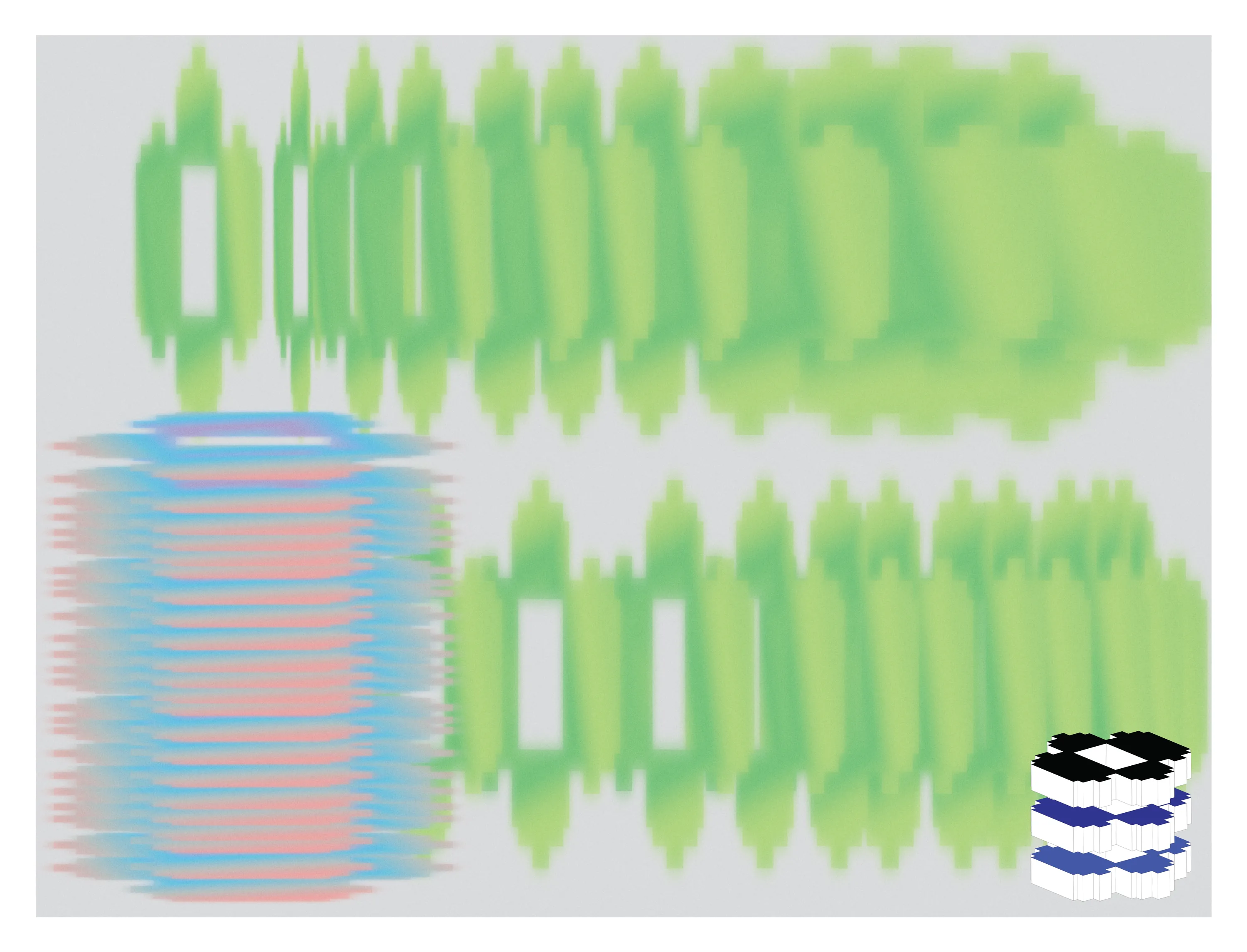
Our research asks whether probabilistic record linkage supplemented
with agentic orchestration can rebuild the broken trail.
Tech Stack
Python engine, Claude API for bulk adjudication (cached);
engine emits full decision trace as JSON, three.js front end.
My Role:
Engine architecture,
visualization design,
agentic orchestration.
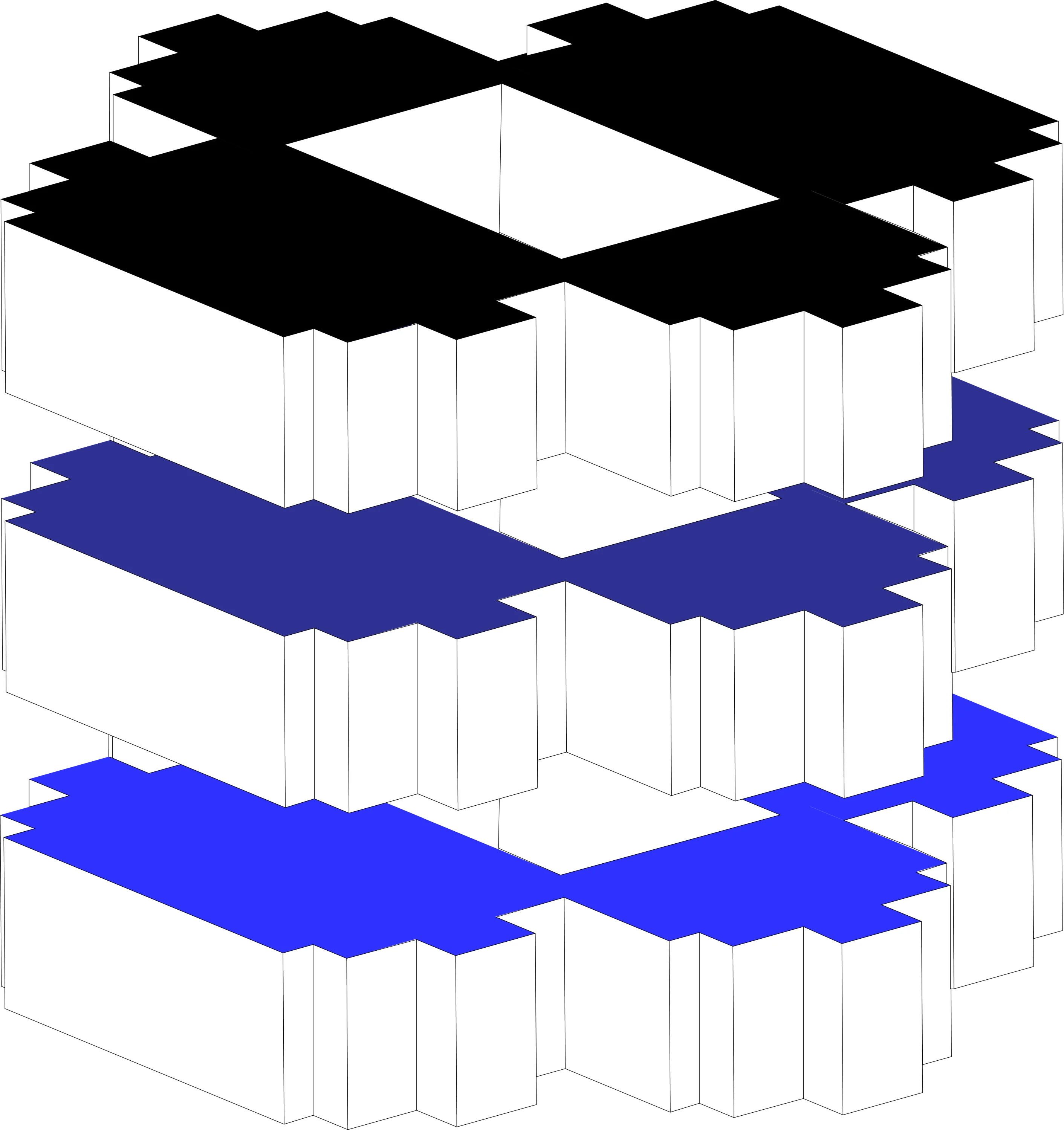
Eight-stage compute pipeline:
Ingest — AI parses messy unstructured records and data.
Blocking — narrows candidate pairs; 9M possible pairs cut to ~300k, zero true pairs lost.
Comparison (γ) — compare each surviving pair field by field at graded agreement levels.
Scoring — sum log(m/u) across fields into one weight-of-evidence score per pair.
Decision zones — two thresholds split pairs into A1 confident link / A2 review / A3 confident non-link.
LLM adjudicator — agents re-read the raw text of the A2 review pile; verdict enters as one more measured field, adjusting the score.
Mass-balance — reconstruct blended lots: inputs must sum to output within tolerance.
Conservation repair — fixes groupings violating quantity conservation.
Calibrated against 86,000 FDA food-recall records, 4.5 million products
in Open Food Facts, and GS1's published traceability event standard.
Outcomes
| configuration | lots traced | rate |
|---|---|---|
| baseline (fuzzy id · surviving edges) | 1,045/3,000 | 0.348 |
| + ER identity only | 1,410/3,000 | 0.470 |
| + mass-balance only | 1,476/3,000 | 0.492 |
| full engine v1 (ER + mass-balance) | 2,006/3,000 | 0.669 |
| + conservation repair (free) | 2,017/3,000 | 0.672 |
| + LLM adjudicator | 2,659/3,000 | 0.886 |
| ENGINE V2 (both) | 2,673/3,000 | 0.891 |
10x Scale
| regime | lots | full engine | + repair (free) | + adjudicator (SIM) | + both |
|---|---|---|---|---|---|
| 3k reference (day-blocked) | 3,000 | 0.6181,854 | 0.6211,864 | 0.8802,641 | 0.8852,655 |
| 30k PROPORTIONAL (450 days) | 30,000 | 0.78323,487 | 0.79123,727 | 0.94528,361 | 0.95528,644 |
| 30k DENSE (same 45 days) | 30,000 | 0.57417,214 | 0.57417,214 | 0.68220,463 | 0.68220,463 |
Vasari
An AI operating system for galleries, art
consulting, and art wealth-management firms.
Built by four friends from Brown, Harvard & Columbia.
Vasari reads a gallery's entire backlog of data —
artworks, auctions, artists, and clients — to sharpen
collection management, client advisory, and day-to-day
operations, orchestrated end to end by AI agents.
CTO & Design
As technical founder, I built the product from the
ground up — learning the tools and stack as I went.
Ownership extended to creative direction: thinking as
both engineer and designer across user experience,
visual systems, branding, and product feel.
Every decision — technical and aesthetic, down to the
tools we chose — was mine to make.
Data
Seeded with 33 artworks and 30 auction-house records,
then scaled by scraping into a working corpus:
~150k artworks
130k auction records
15k unique artist profiles
322 auction houses
150k embeddings
$150,000 angel investment.
Beta-tested with RISD galleries to validate the
data-quality-check pipelines on real collections.
Tech Stack
Database: PostgreSQL, Redis, AWS S3, Scrapy
AI models: Claude Sonnet 4.6, GPT-4o & Vision, text-embedding-3-small
Architecture: RAG pipeline, JSONB embeddings, Redis-cached responses
Frontend: React, Tailwind, Framer Motion · Vercel
Backend: FastAPI, SQLAlchemy, Alembic, Pydantic, Celery · Railway
Design Research Project:
The Idea
Most generative AI produces art it cannot explain.
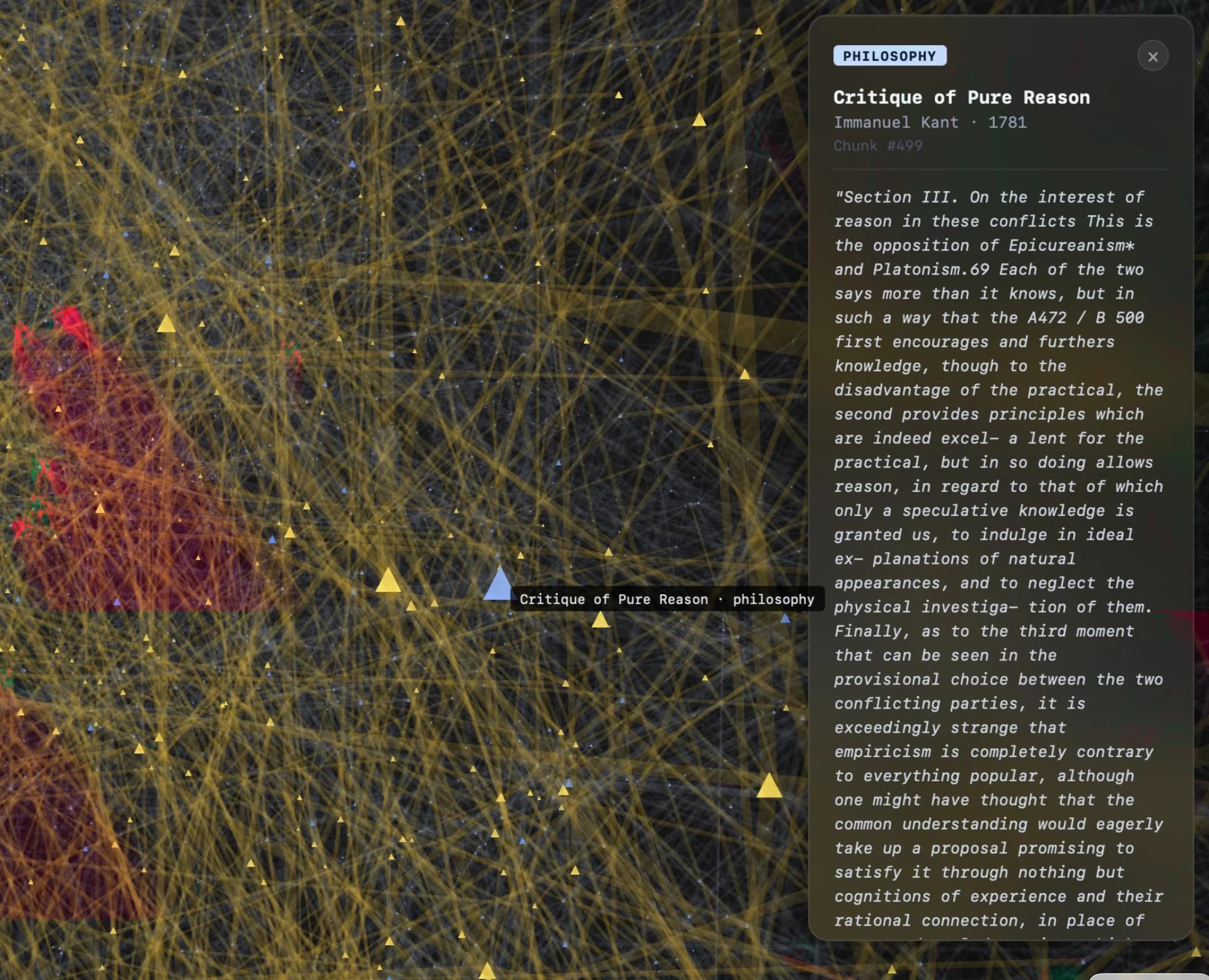
This project is an experiment in the opposite: a system
that composes abstract art purely from semantic vectors
— a graph of embedded human literature, philosophy, and
poetry, where source passages vote on every creative decision.
Nothing is generated from a black box; every color, shape,
and placement carries a justification trace pointing back
to the exact texts that drove it.
The Experiment
The research question was whether interpretability could
be a creative mechanism rather than a constraint. Each
finished piece is re-ingested as 'talent data,' strengthening
the associations that produced it — so over time, the
system's preferences compound and something like a style emerges.
The product design followed the same principle: a navigable
3D visualization of the semantic graph makes the system's
reasoning as much the artwork as the SVG output itself.
The honest finding is not that the machine became an artist,
but that value-driven, fully-traceable creation is possible —
and that watching a style form from readable decisions is a
fundamentally different experience than prompting a model.
Tech Stack & Data
The corpus is a curated body of humanities texts —
literature, philosophy, poetry, history, lyrics — embedded
with sentence-transformers into a NetworkX semantic graph
that serves as the system's memory.
A Python backend (FastAPI, svgwrite) runs the parameter-
voting engine, SVG generation, and justification tracing;
a TypeScript frontend (Three.js, 3d-force-graph) renders
the graph as an explorable 3D space.
Art is output as SVG deliberately: as structured text, each
piece can be parsed back into the graph as data, closing
the self-training loop without any image processing.
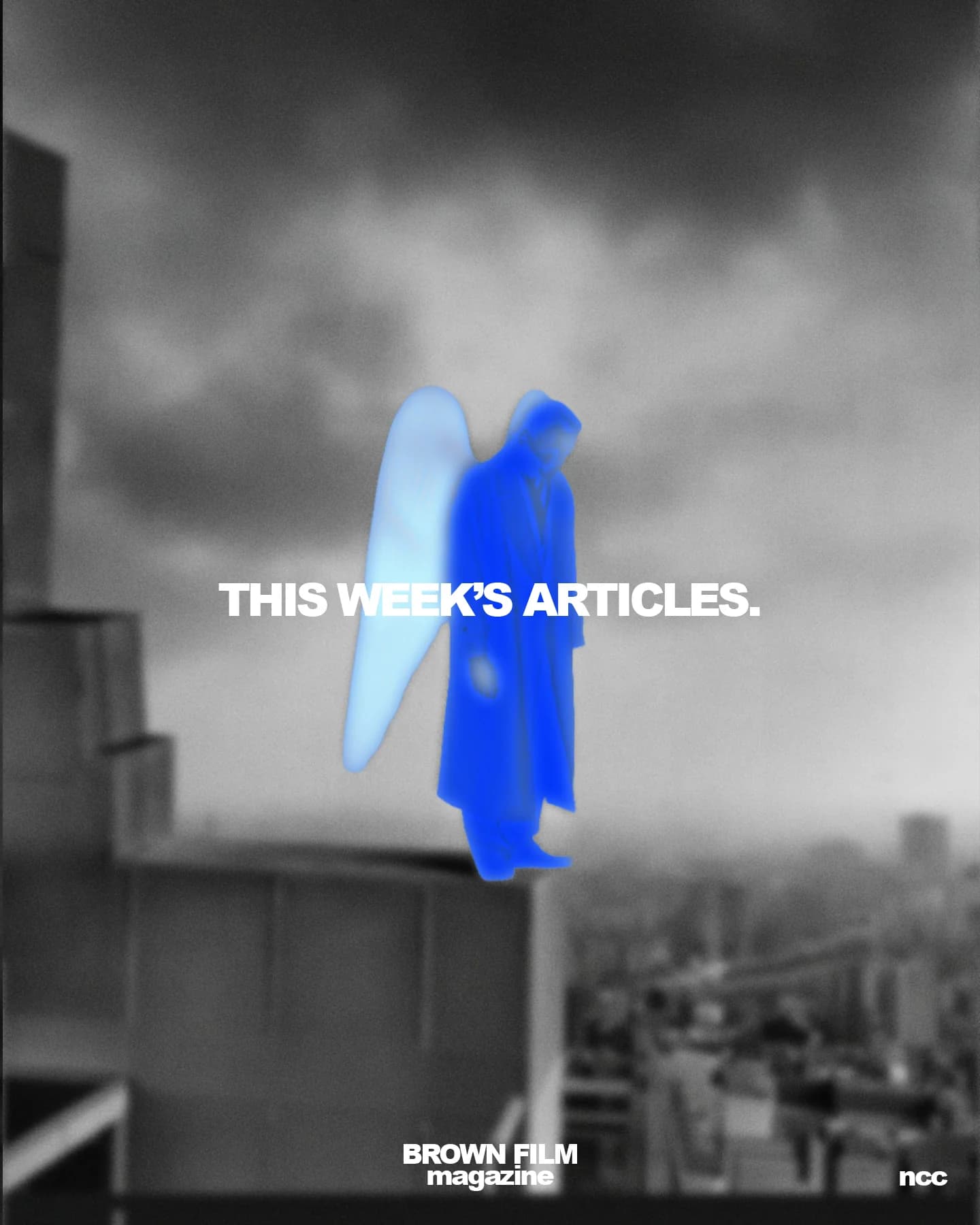
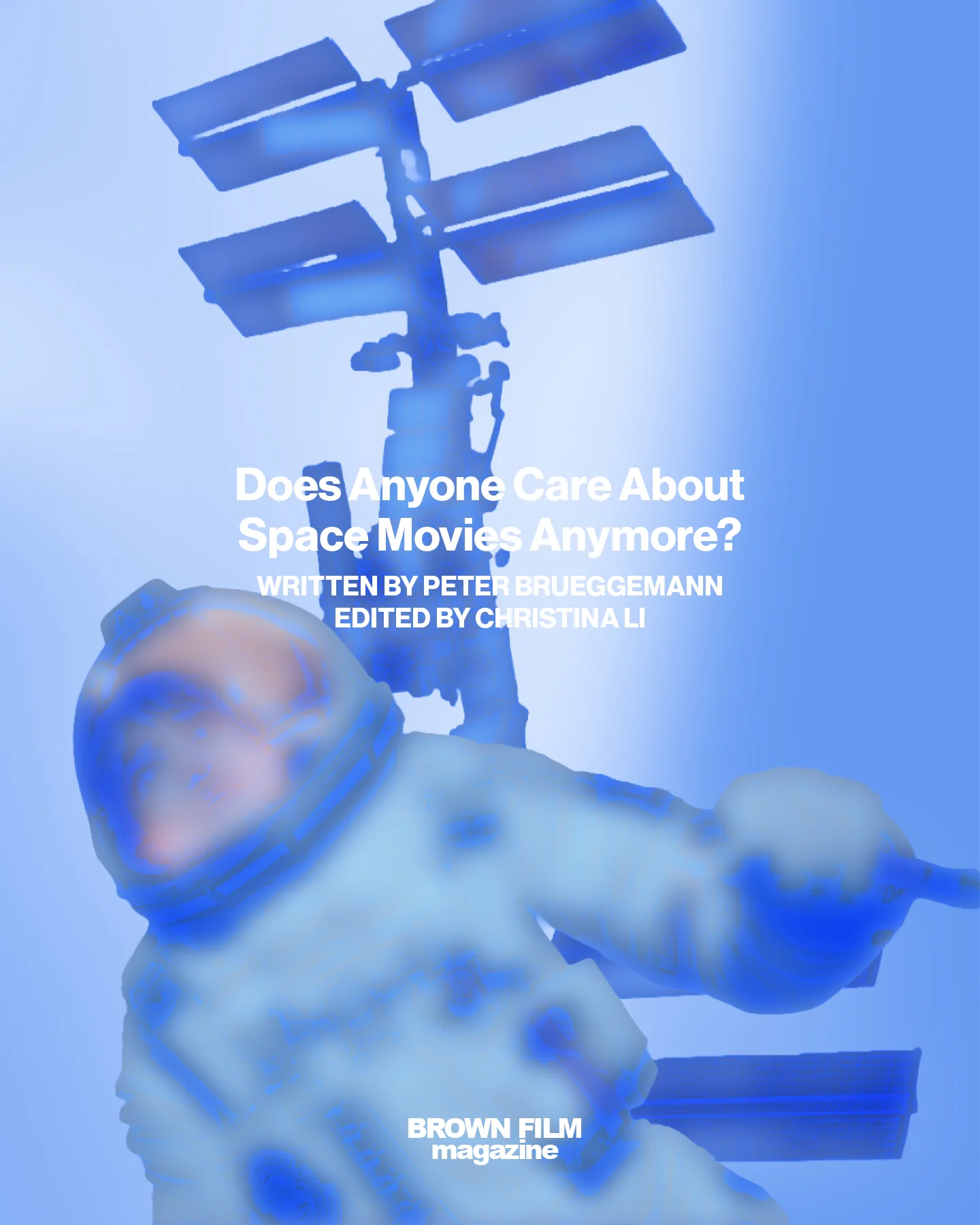
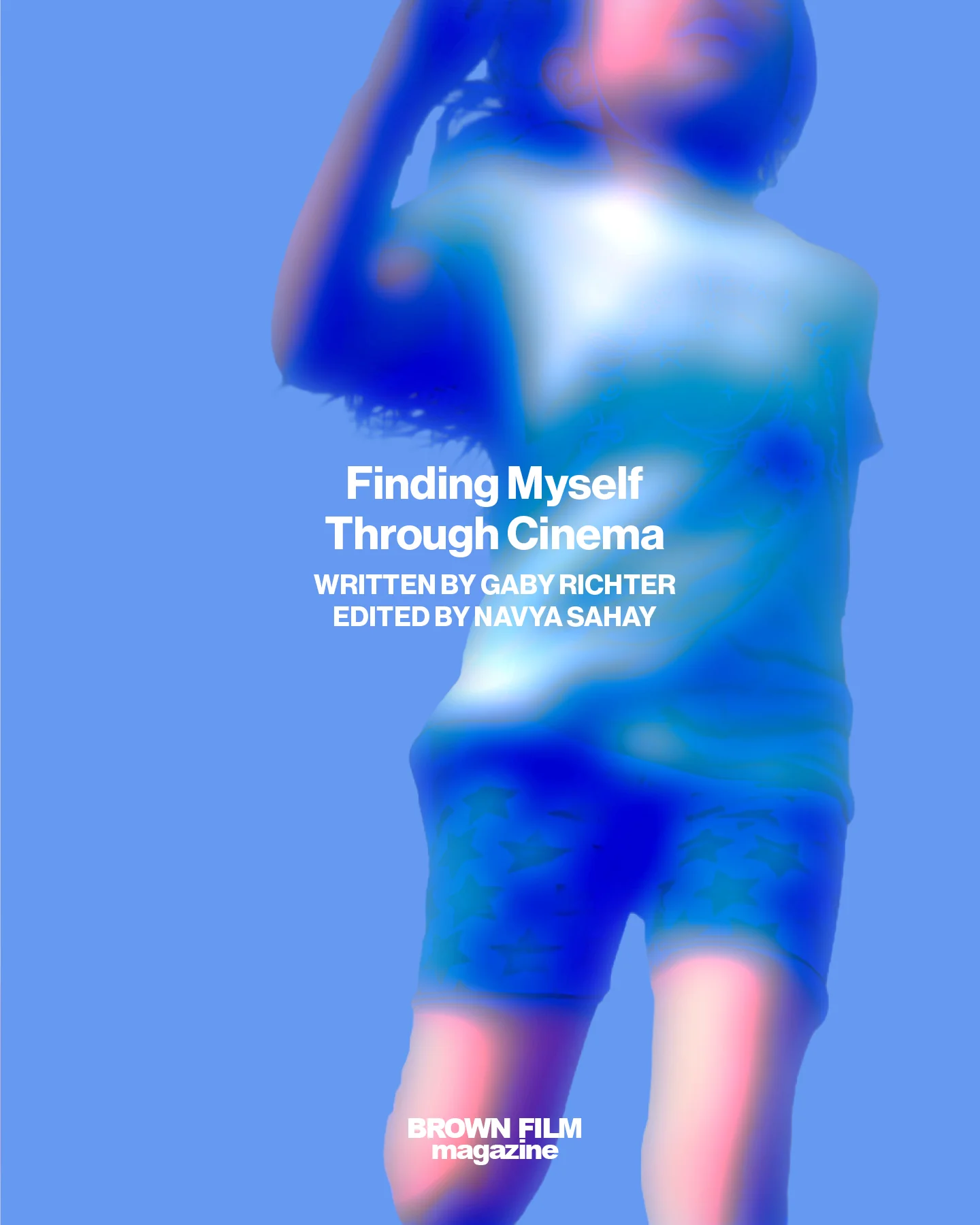
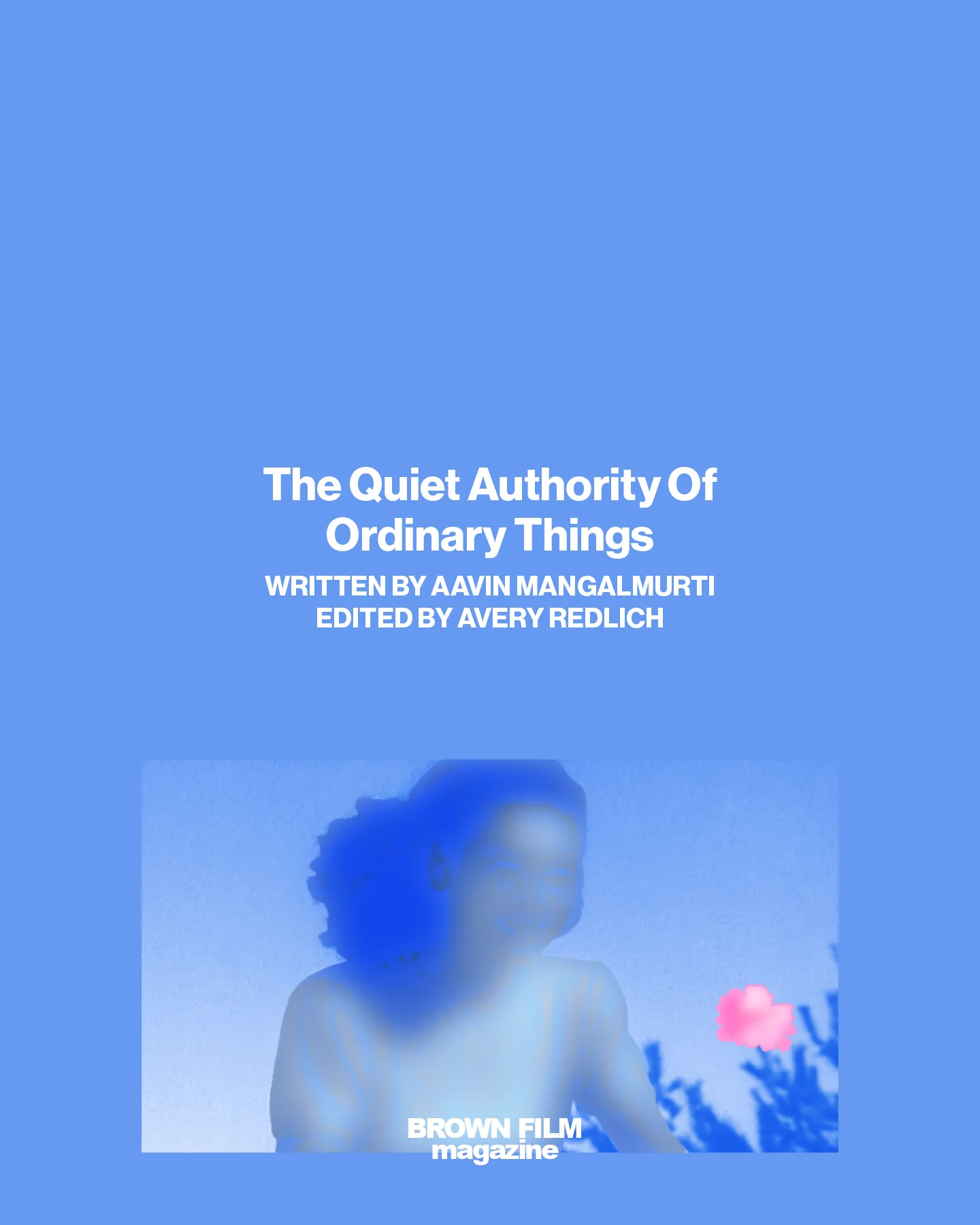
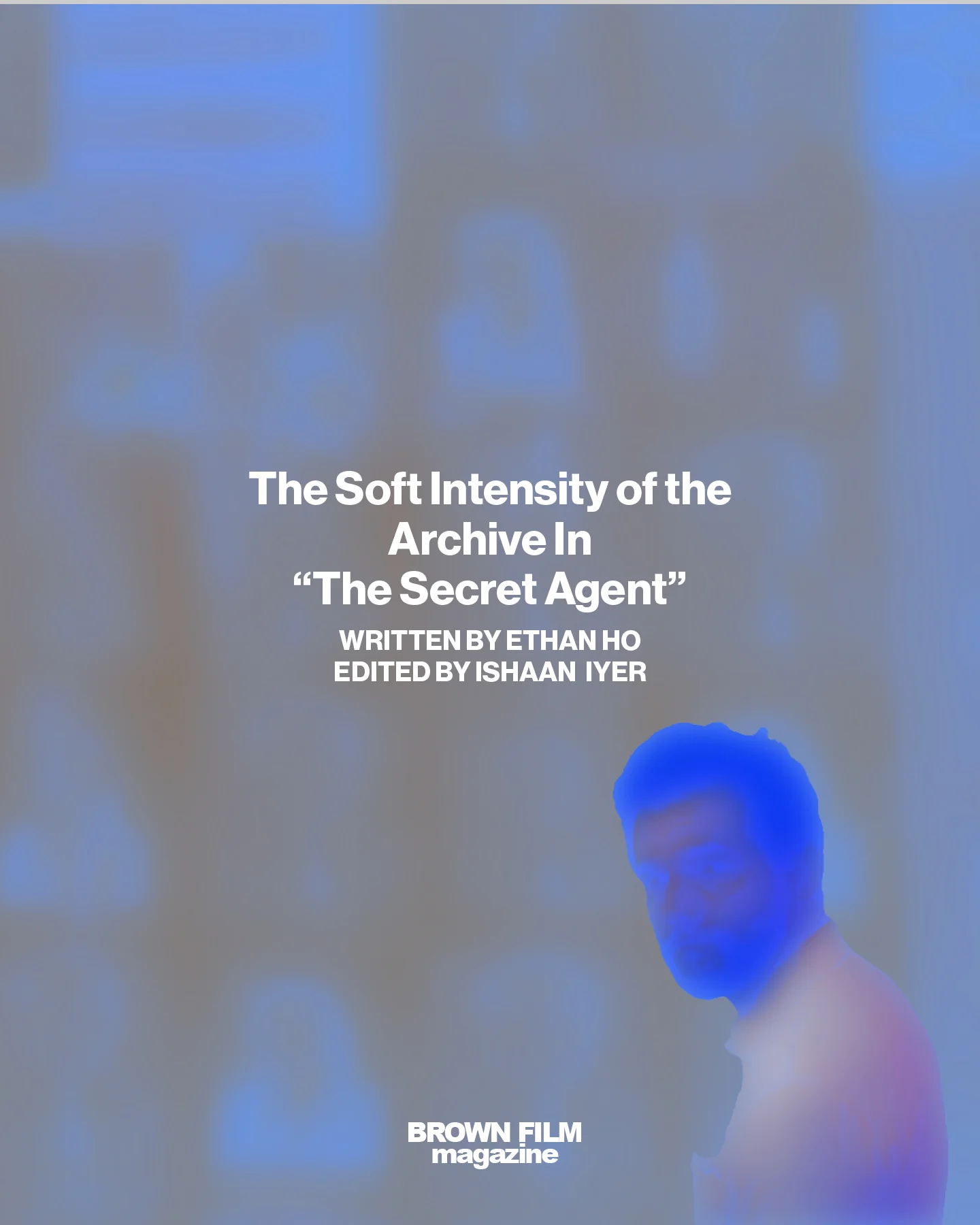
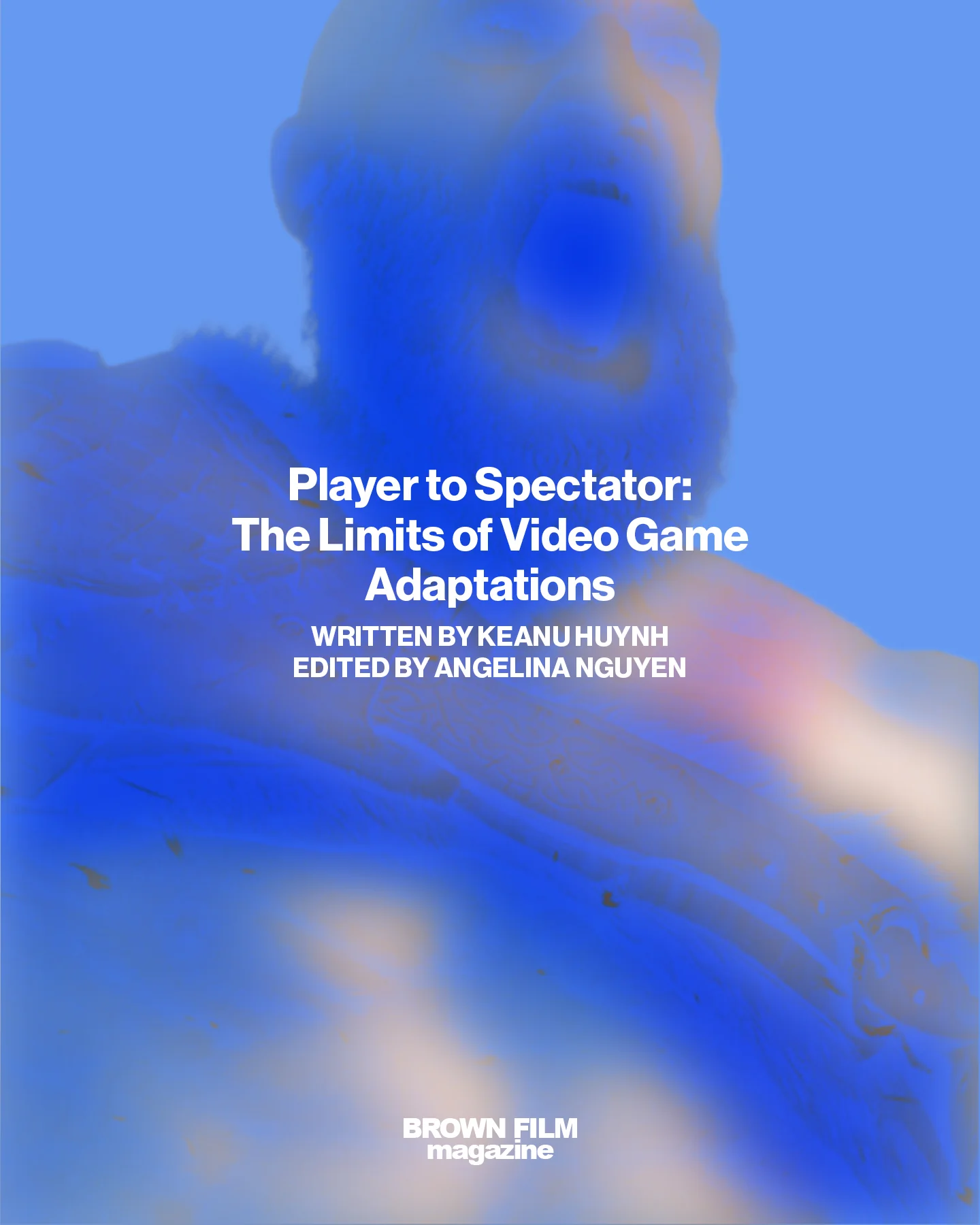
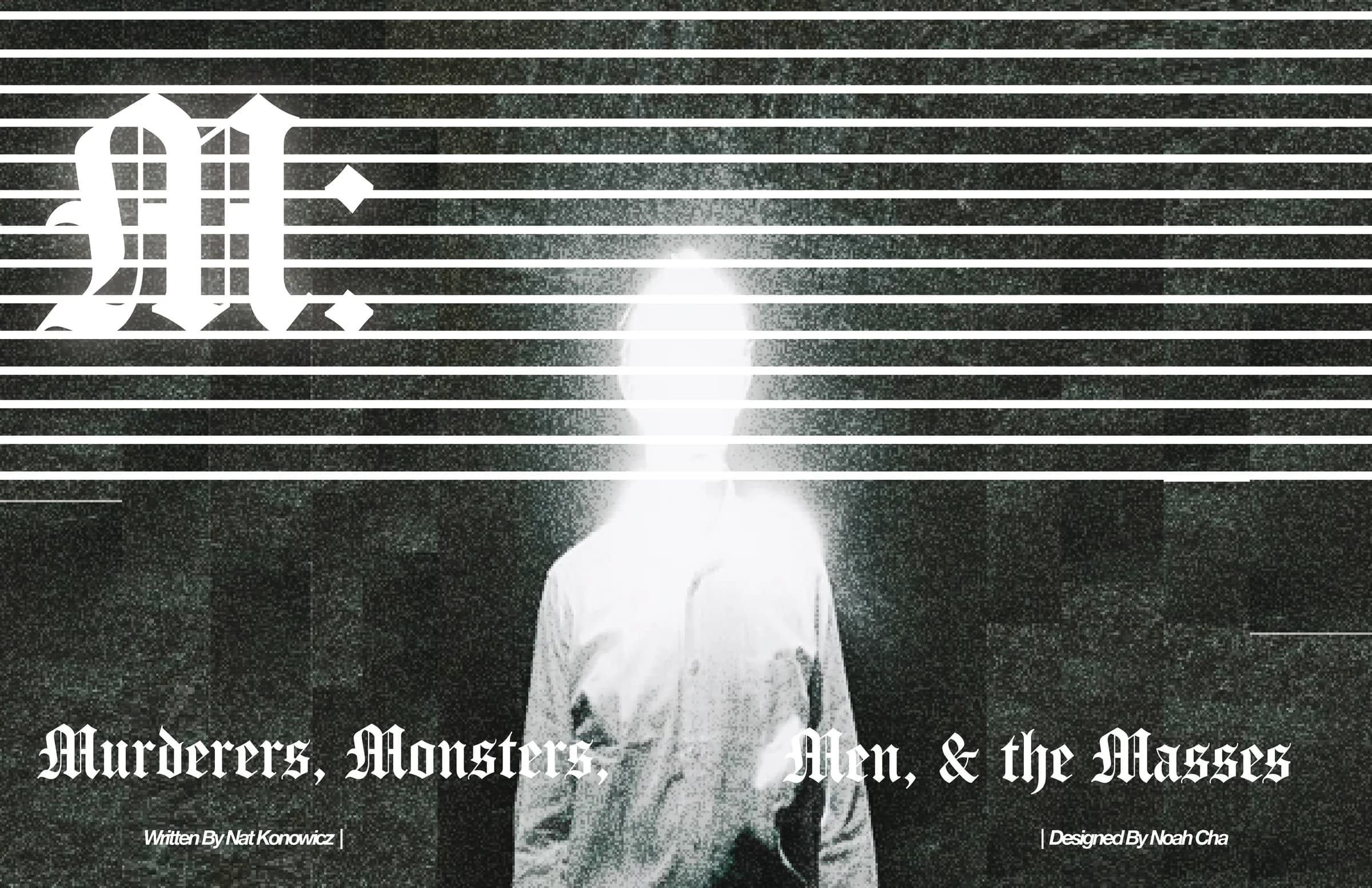
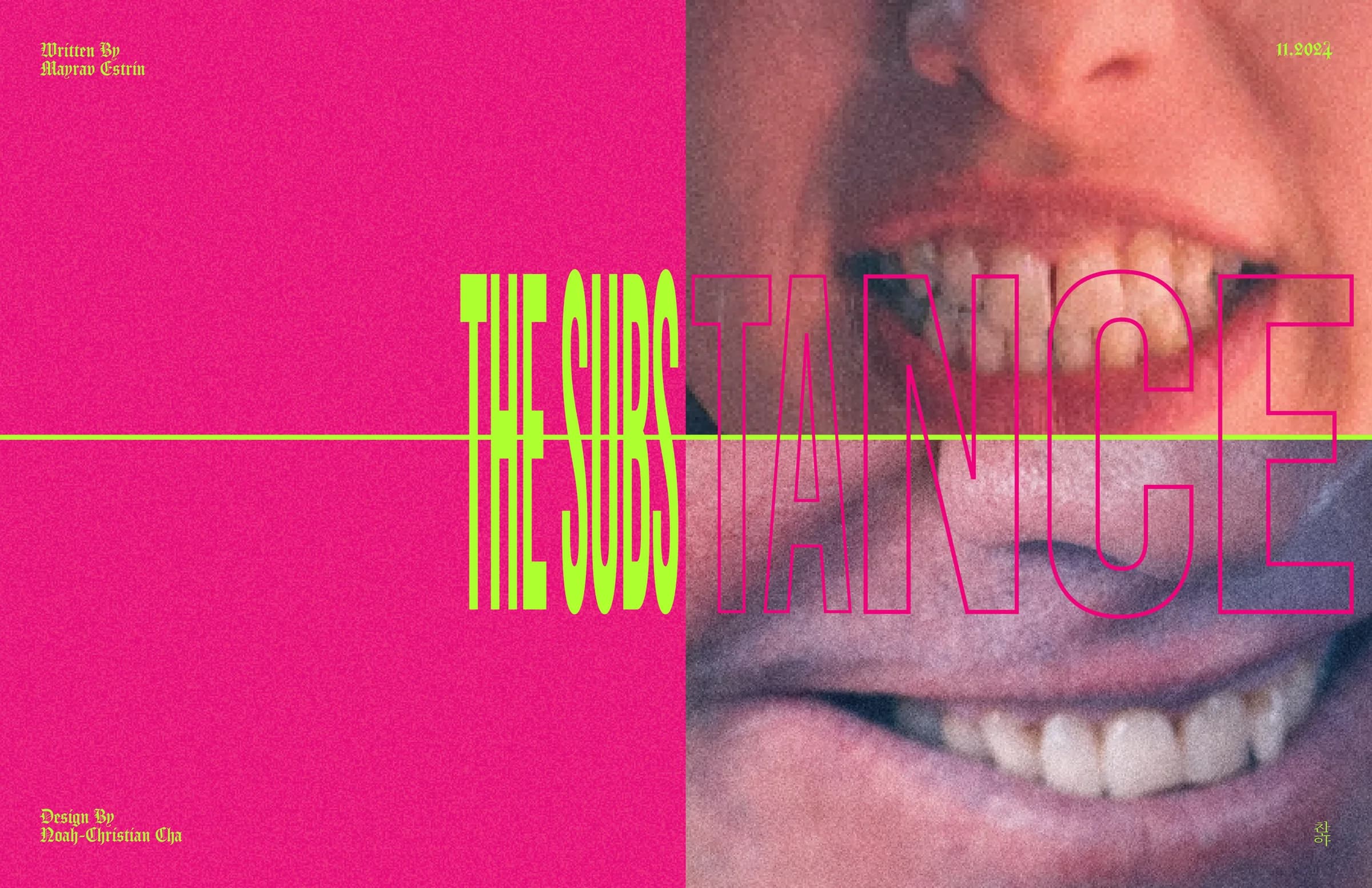
Brown Film Magazine
Brown University's student-run community
of film fanatics.
Brown Film Magazine is the university's preeminent
space for film and television enthusiasts to see
their writing in print.
Head of Design
Noah Cha
I lead a team of roughly 20 designers and illustrators —
recruiting and mentoring the group, and art-directing
every issue from cover to final page.
Responsibilities — assigning spreads across the team,
running critiques and design meetings, coordinating with
editors and writers to pair each article with the right art,
and steering the biannual print issue through layout and
pre-press to an on-schedule, print-ready ship.
Creative direction — setting each issue's visual
identity (theme, palette, typography, and grid), designing
the cover and key spreads, curating which artwork pairs
with which piece, and evolving BFM's design language
while keeping twenty individual voices cohesive.
Online
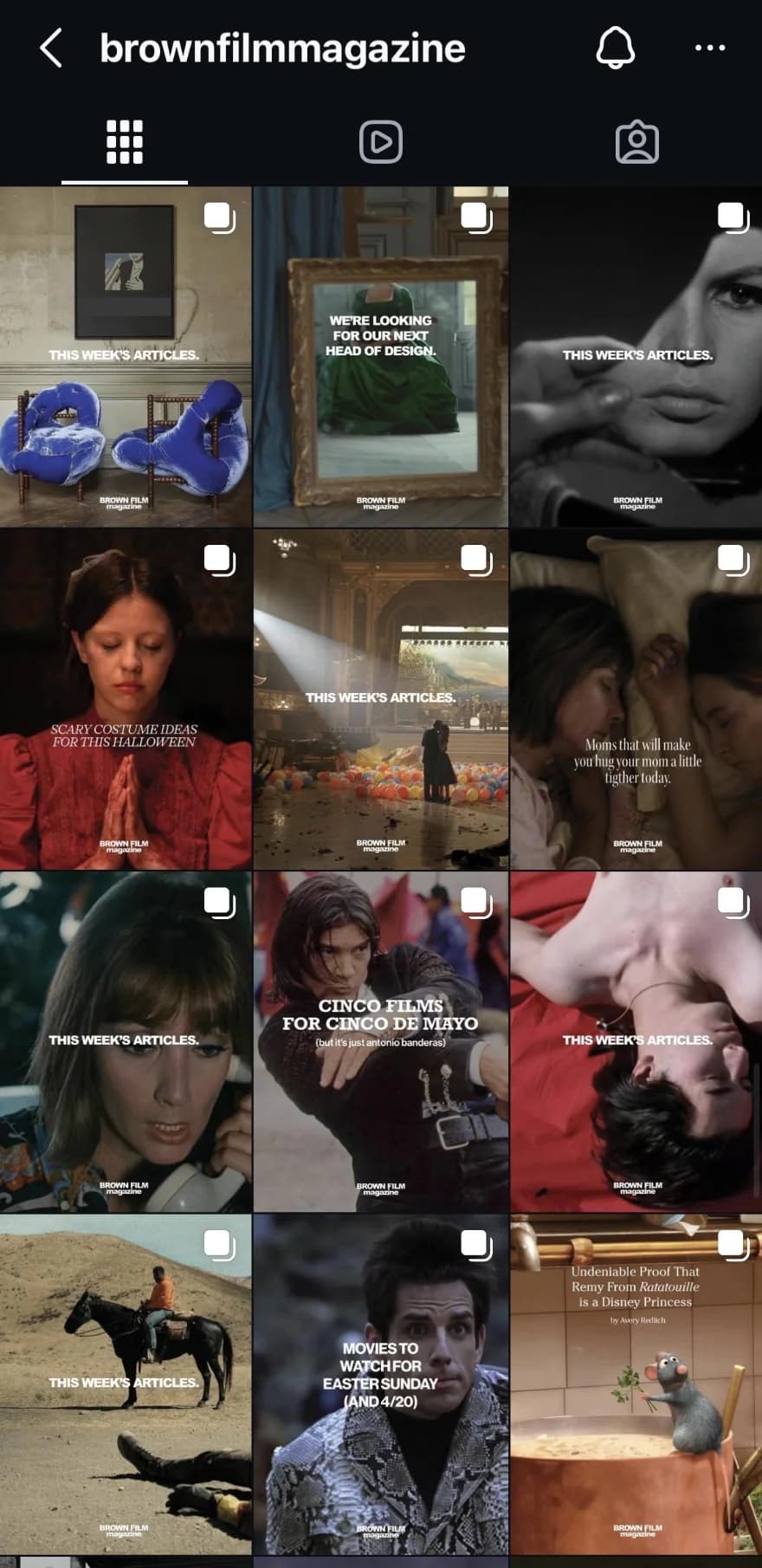
Driven by a massive team of talented staff writers,
editors, designers, and illustrators, BFM maintains a
regular presence online where you can find film reviews,
interviews with industry members, argumentative articles,
analyses, comedy pieces, and more.
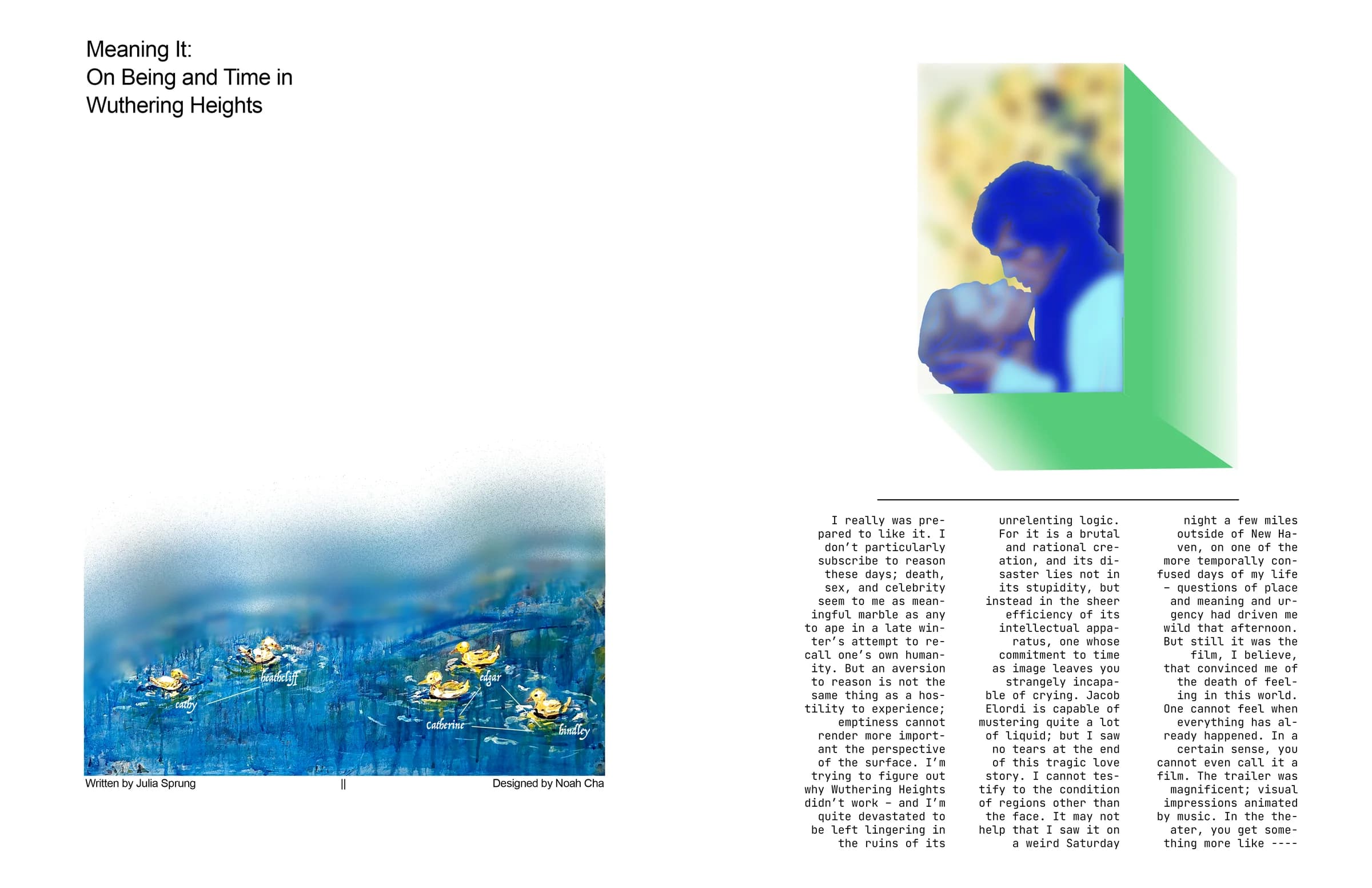
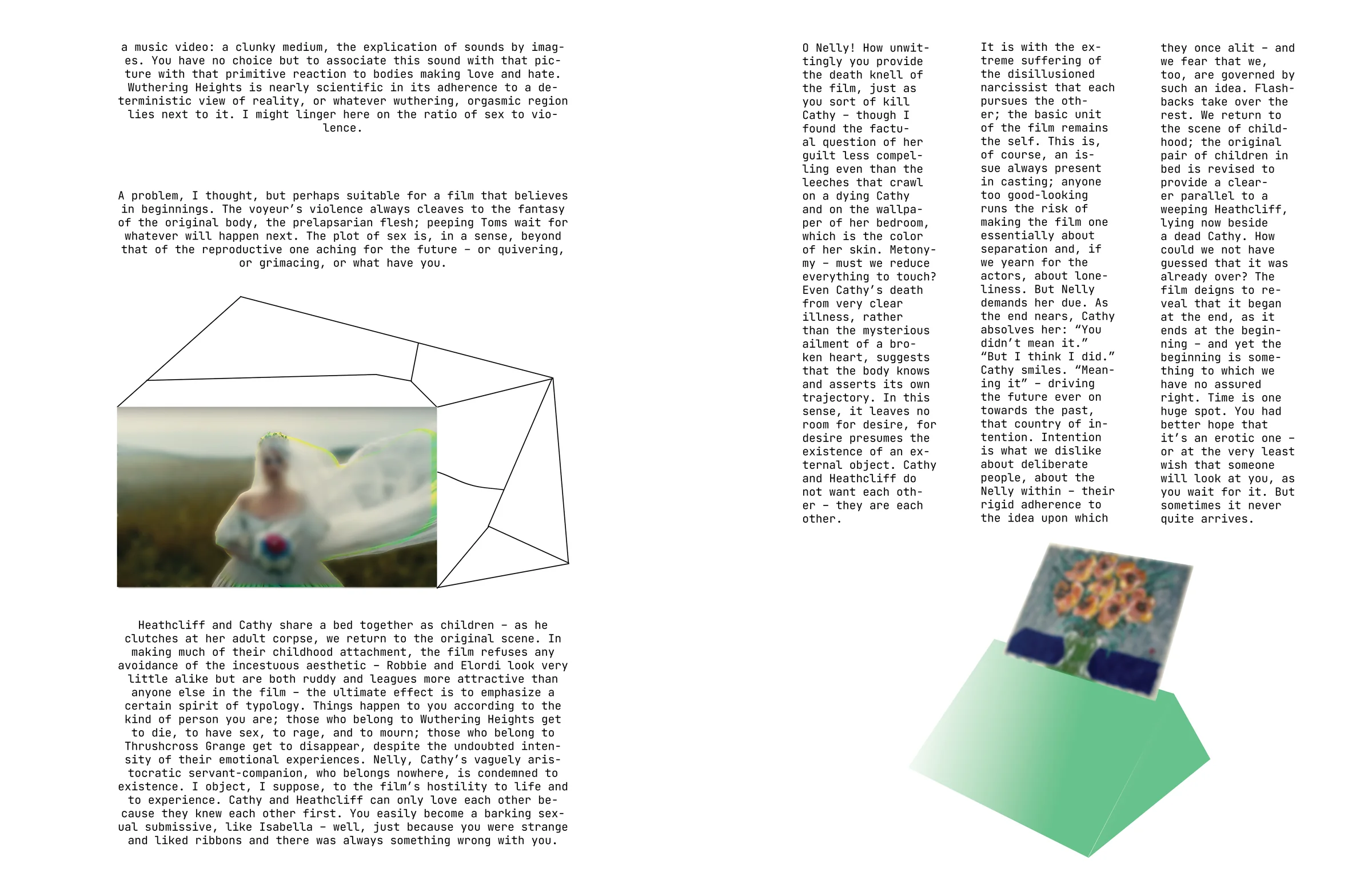
In Print
Twice a year, BFM assembles a seasonal print issue
which pairs our favorite articles of the semester with
breathtaking artwork and design spreads.
Community
Since its founding, BFM has become more than just a
publication — we've become the go-to community for
students on campus united by a love for the cinematic medium.
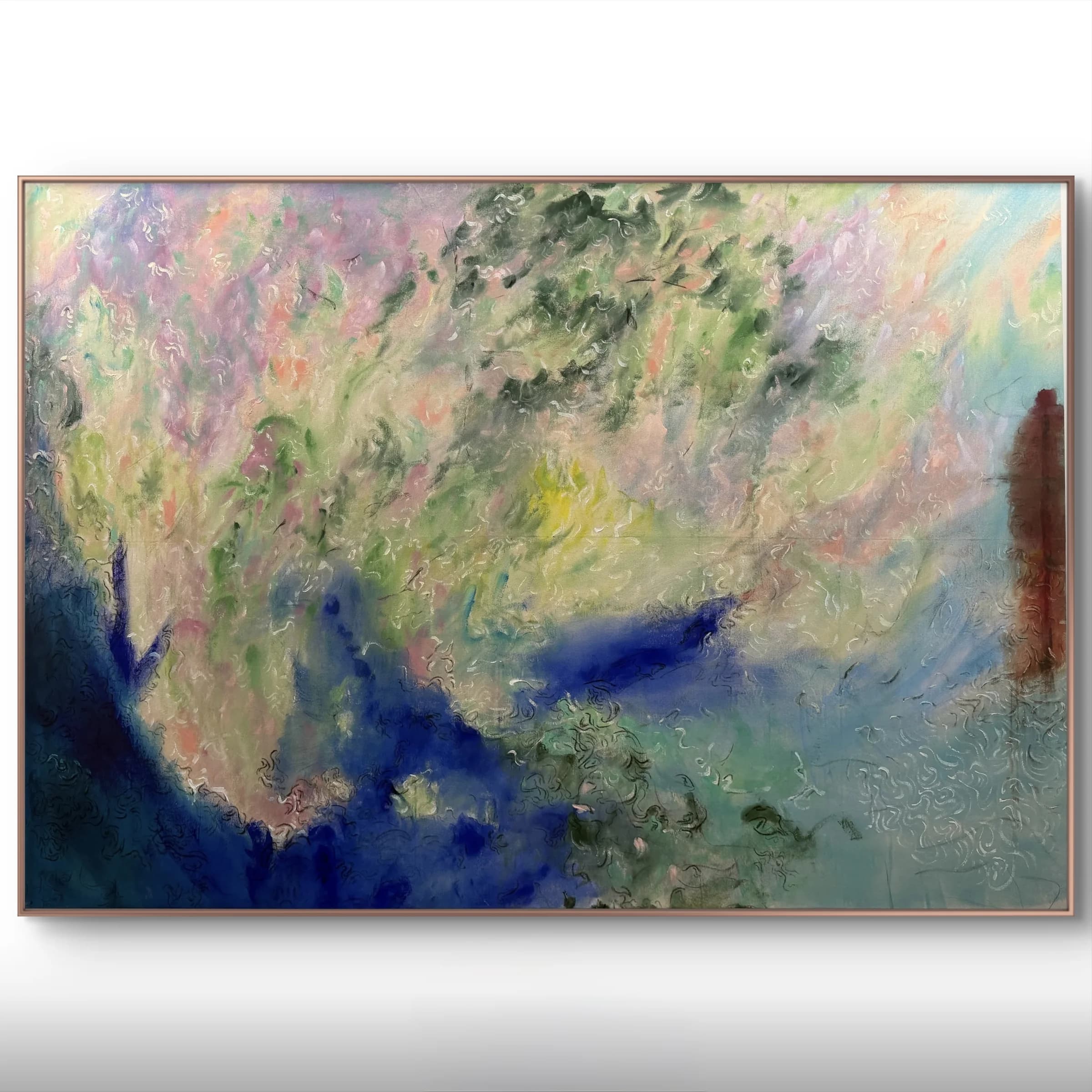
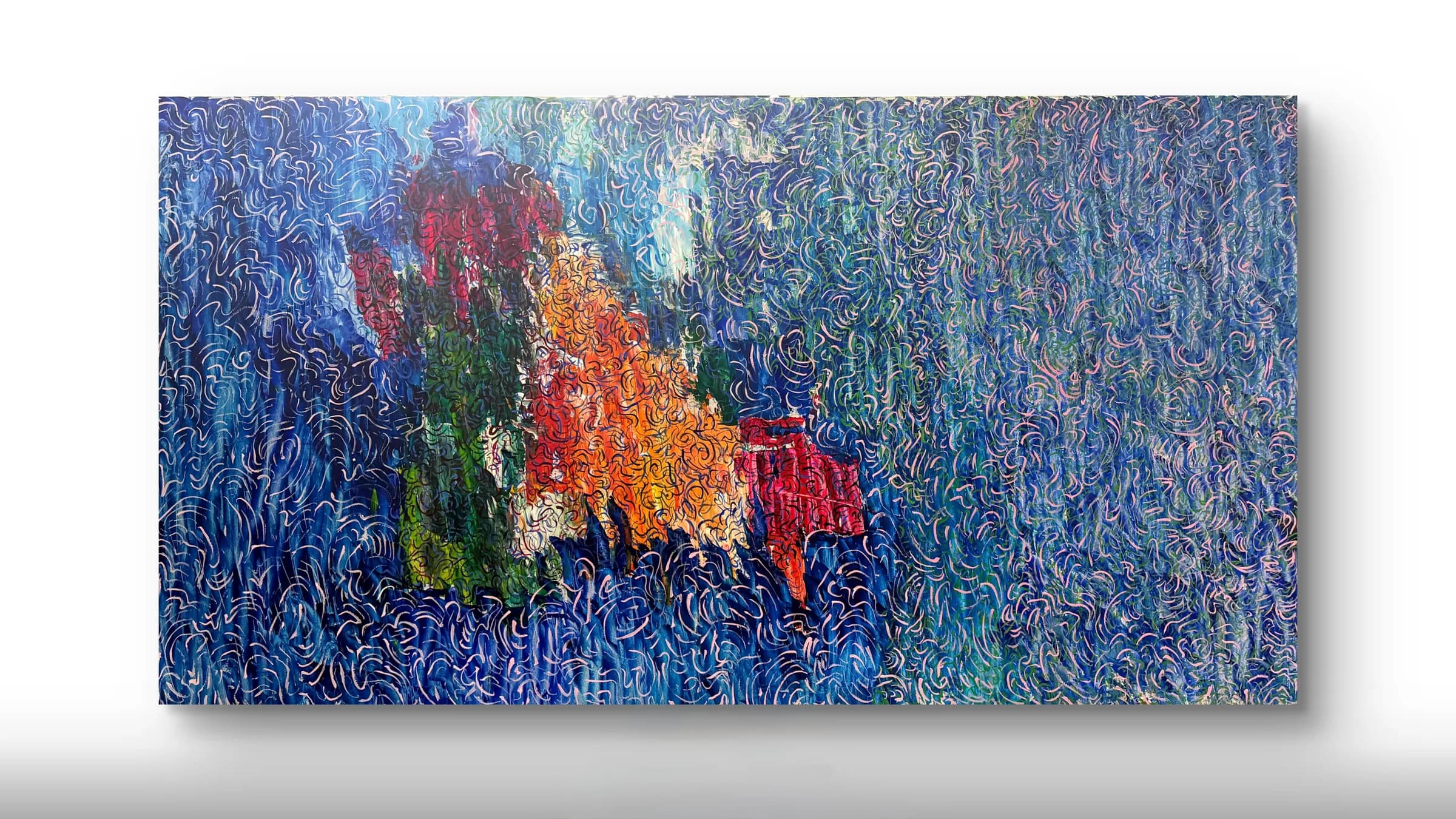
Garden of Eden 56" × 84"
2026
acrylic, charcoal
One of the largest paintings I've worked on — to mark
a summer of ample downtime to think and hone in
creative output and process.
An emotional balance between hope and longing.
An abstract study of a landscape lush with forestry
and flowers and flowing water. Guarded by the flames
of an angel's sword.
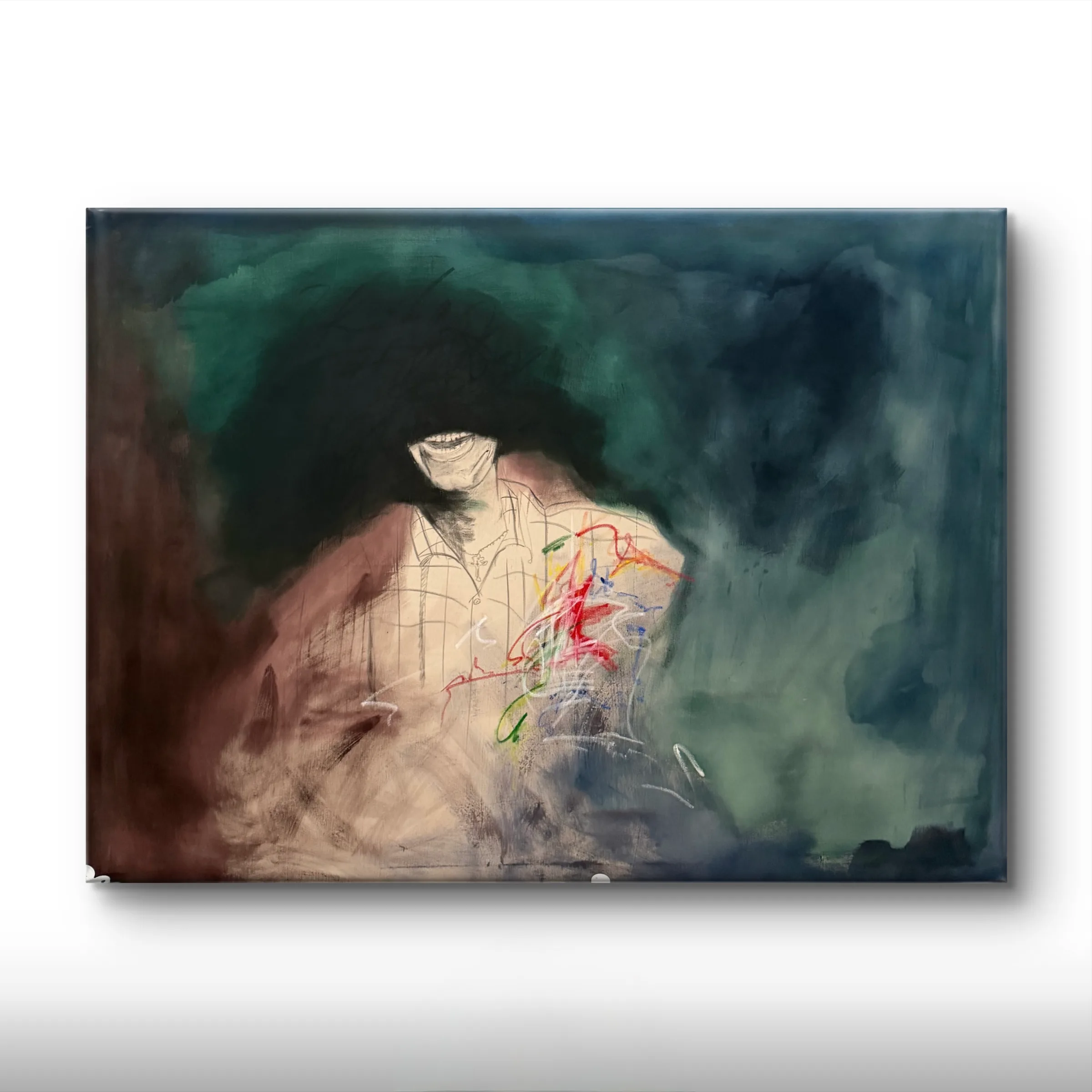
Fleeting Ambition 56" × 84"
2026
acrylic, oil pastel, charcoal
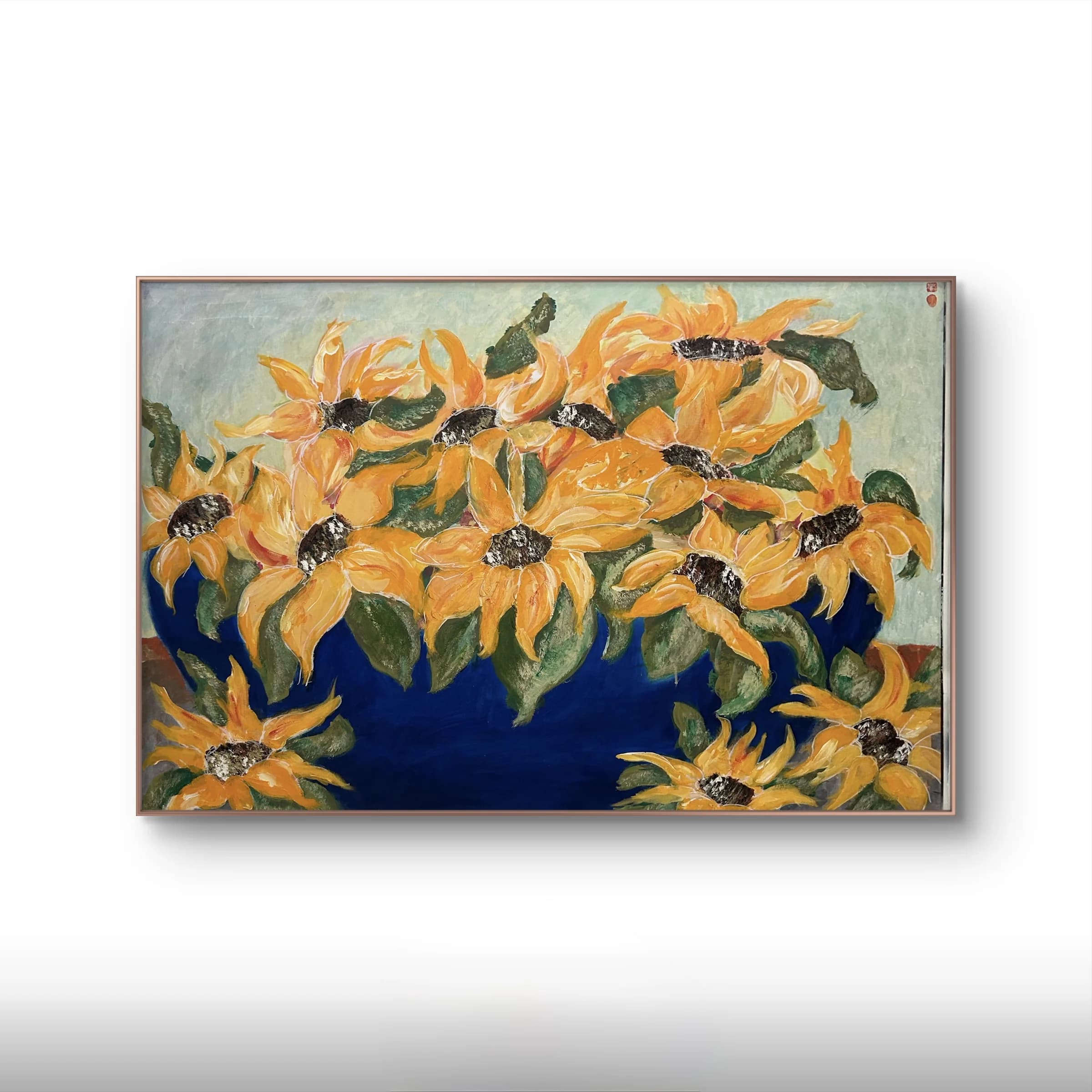
Sunflowers 47" × 35"
2024
acrylic on canvas
I had always considered myself to be an artist. But
senior year of high school was when I first decided
to paint simply to paint — not for the goal of a
portfolio; a dream of going to art school was years
old by then.
This painting for my mother would be the first major
project I would challenge myself with, having no real
goal in mind other than to create and see if I could
simply be proud of a finished piece of work hanging
in front of my mother's office.
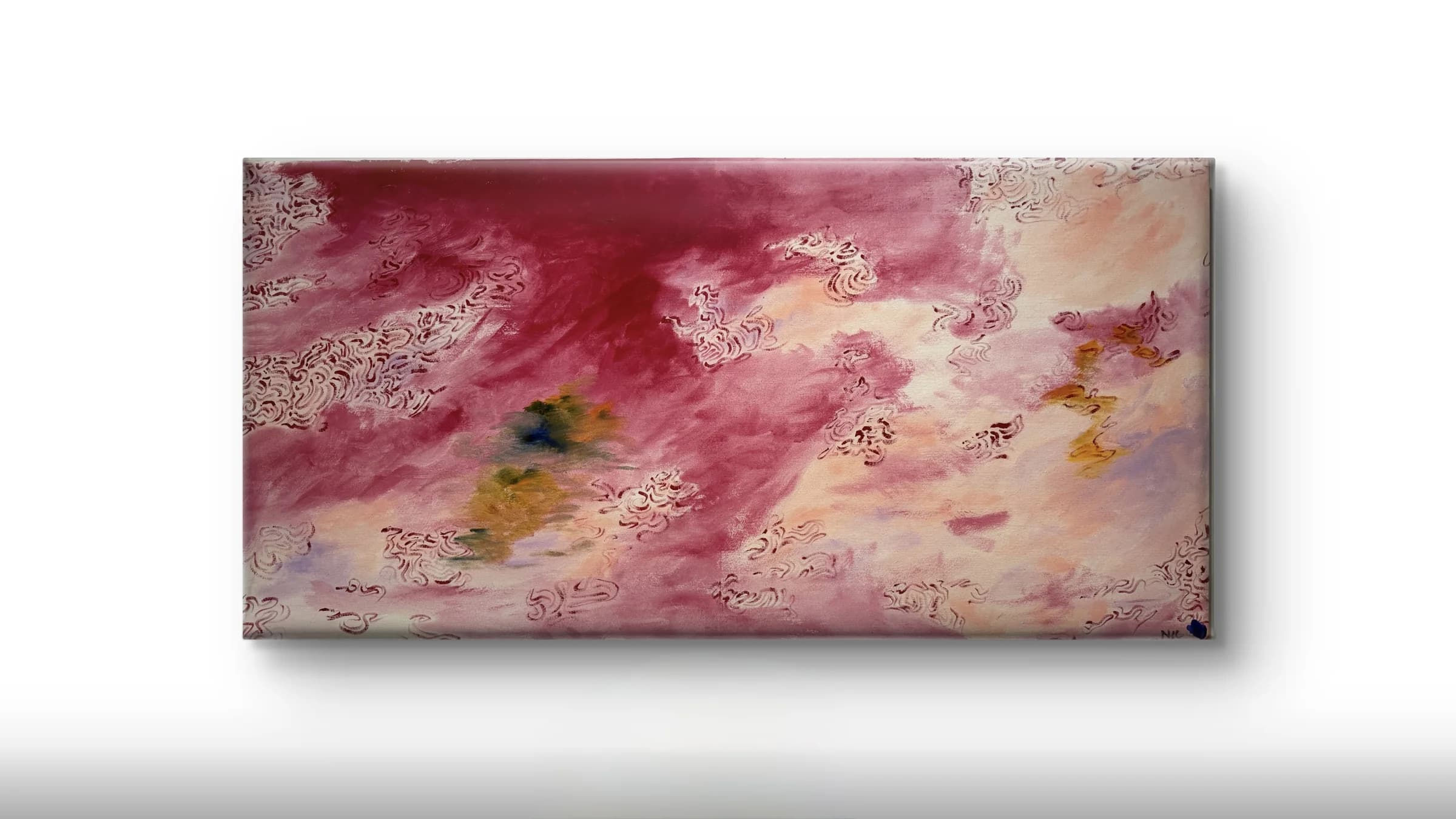
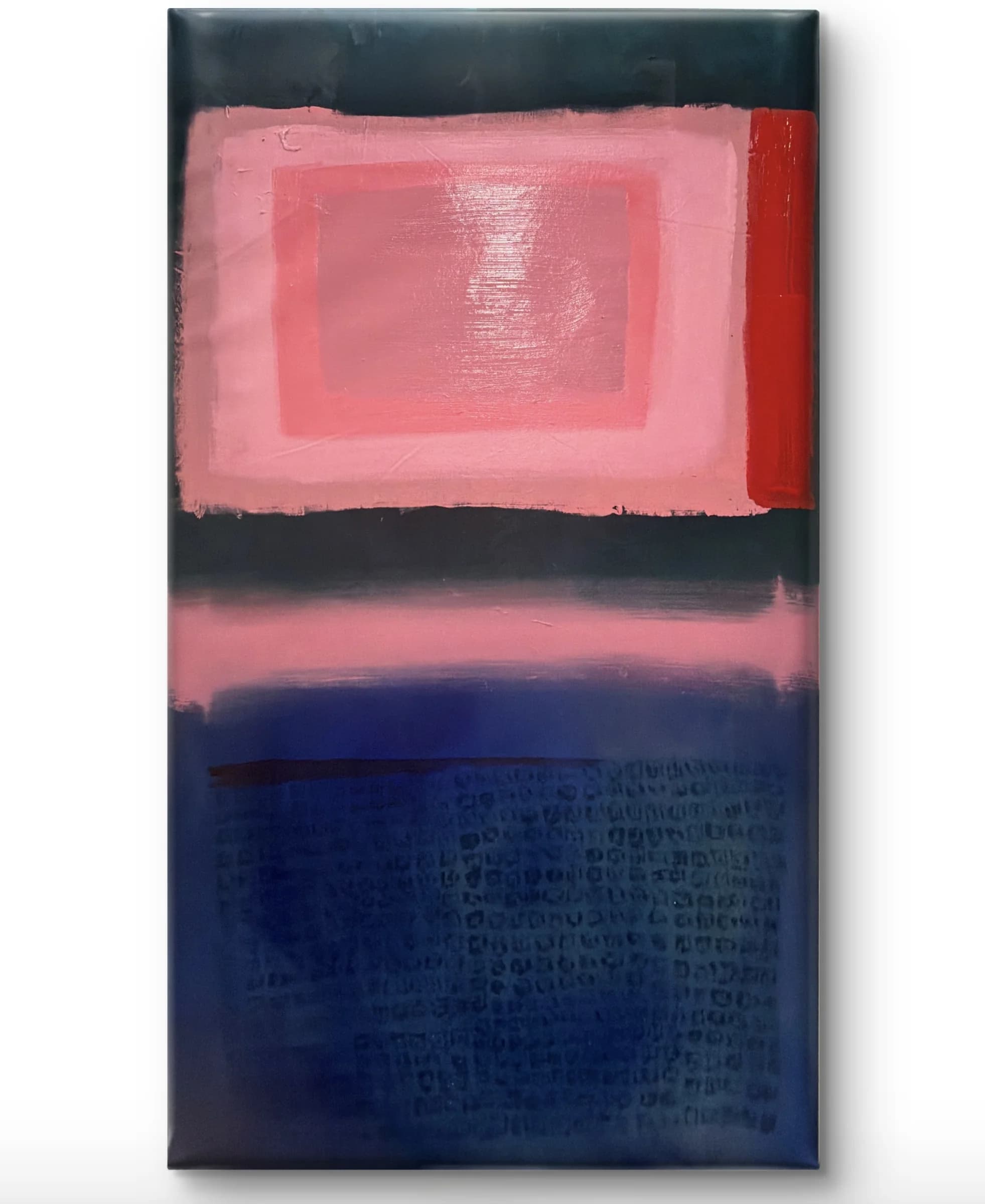
Untitled 28" × 54"
2026
acrylic on raw canvas
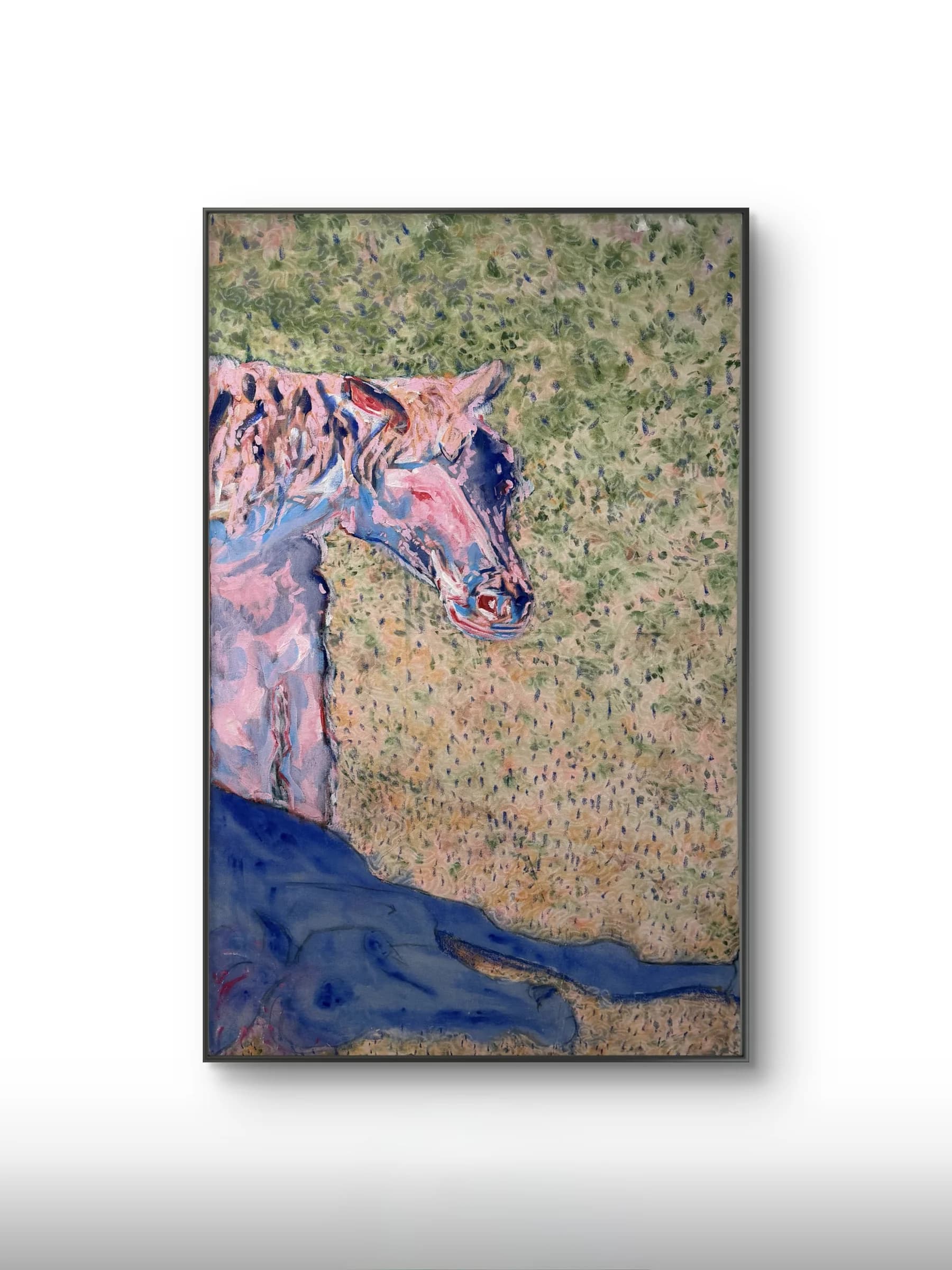
Herald 30" × 56"
2026
acrylic, oil pastel on raw canvas
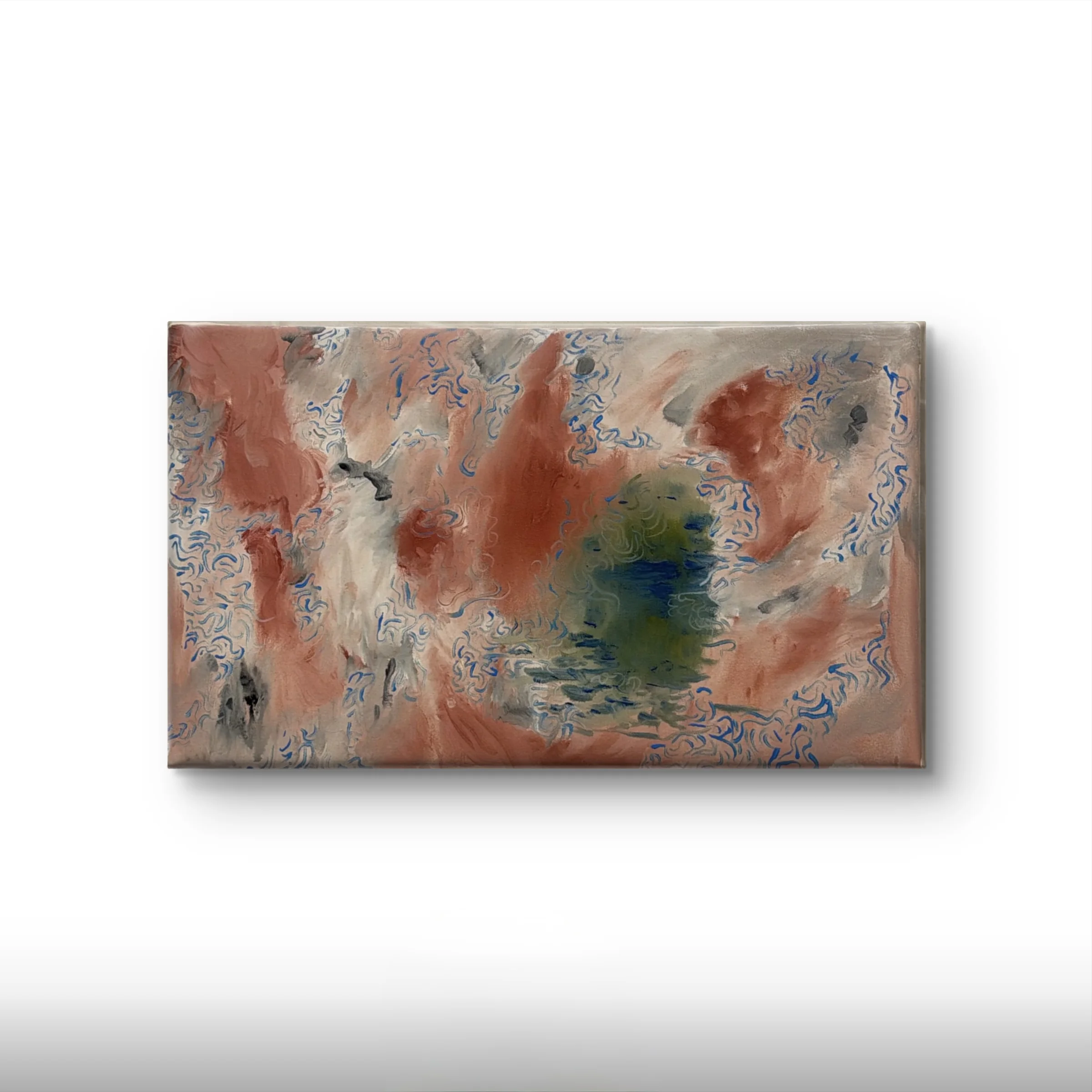
Untitled 16.5" × 28"
2026
acrylic on raw canvas
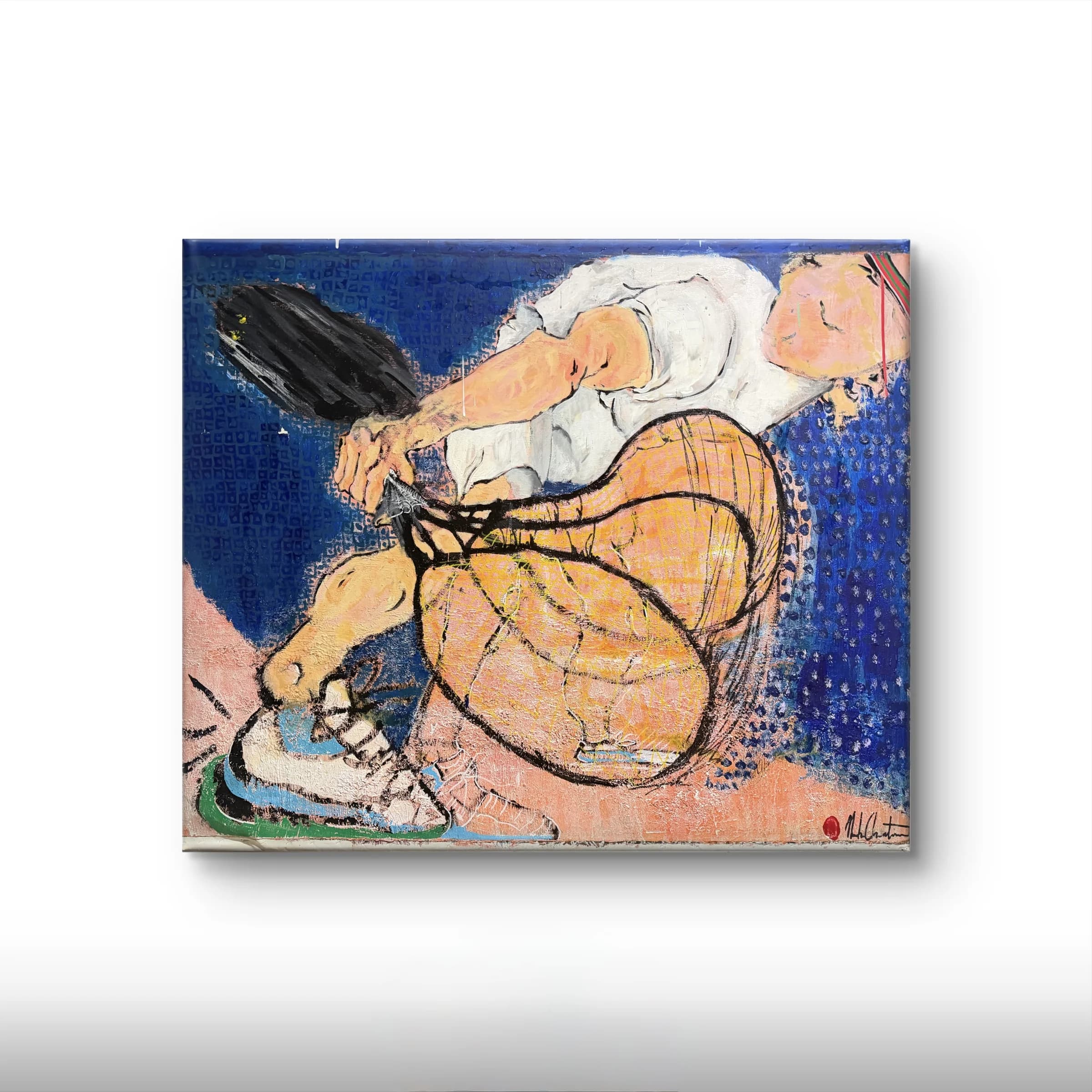
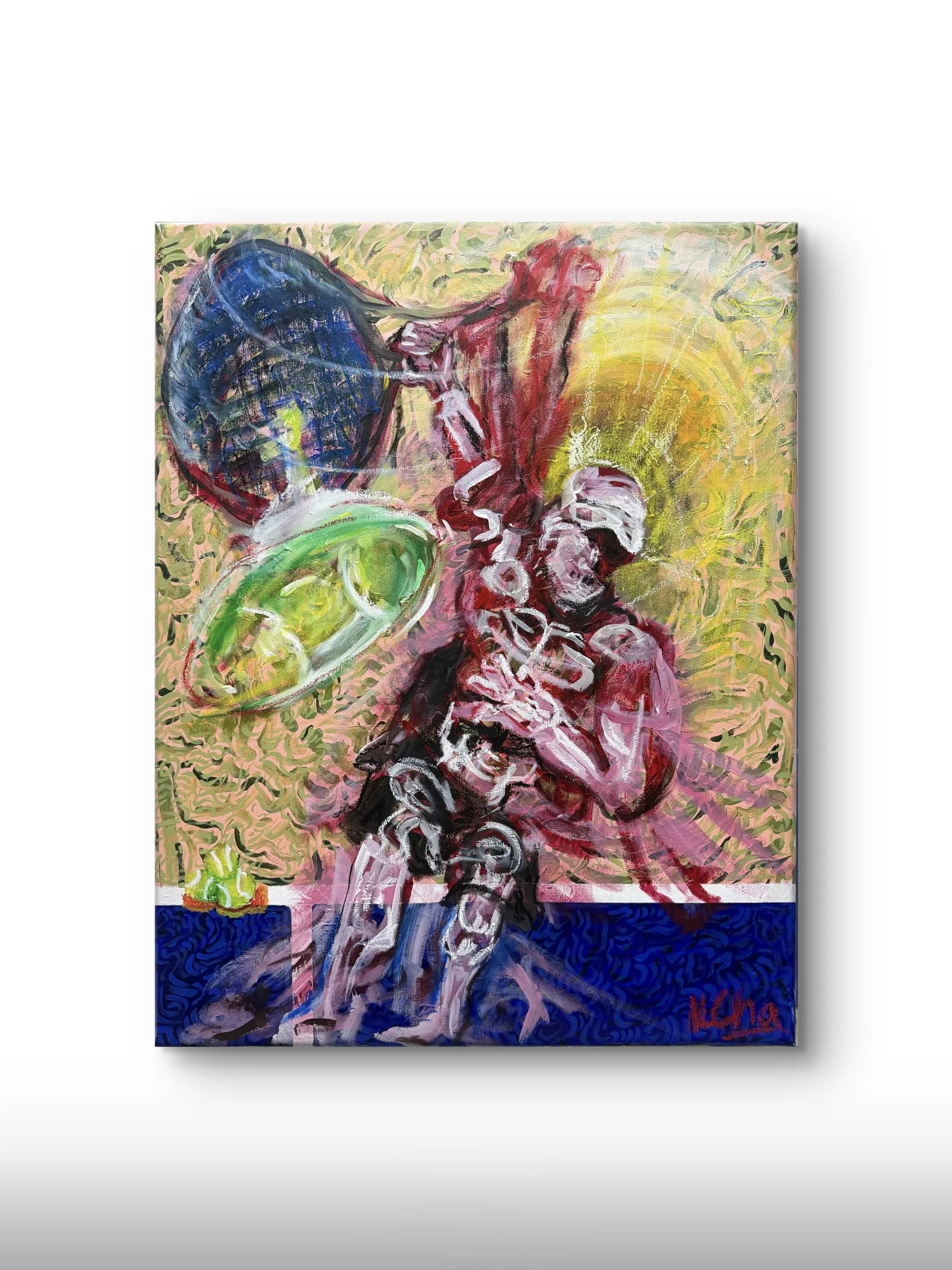
Dropshot 38" × 46"
2025
acrylic on canvas
Honorable Mention,
Brown Granoff Center Student Exhibition 2026.
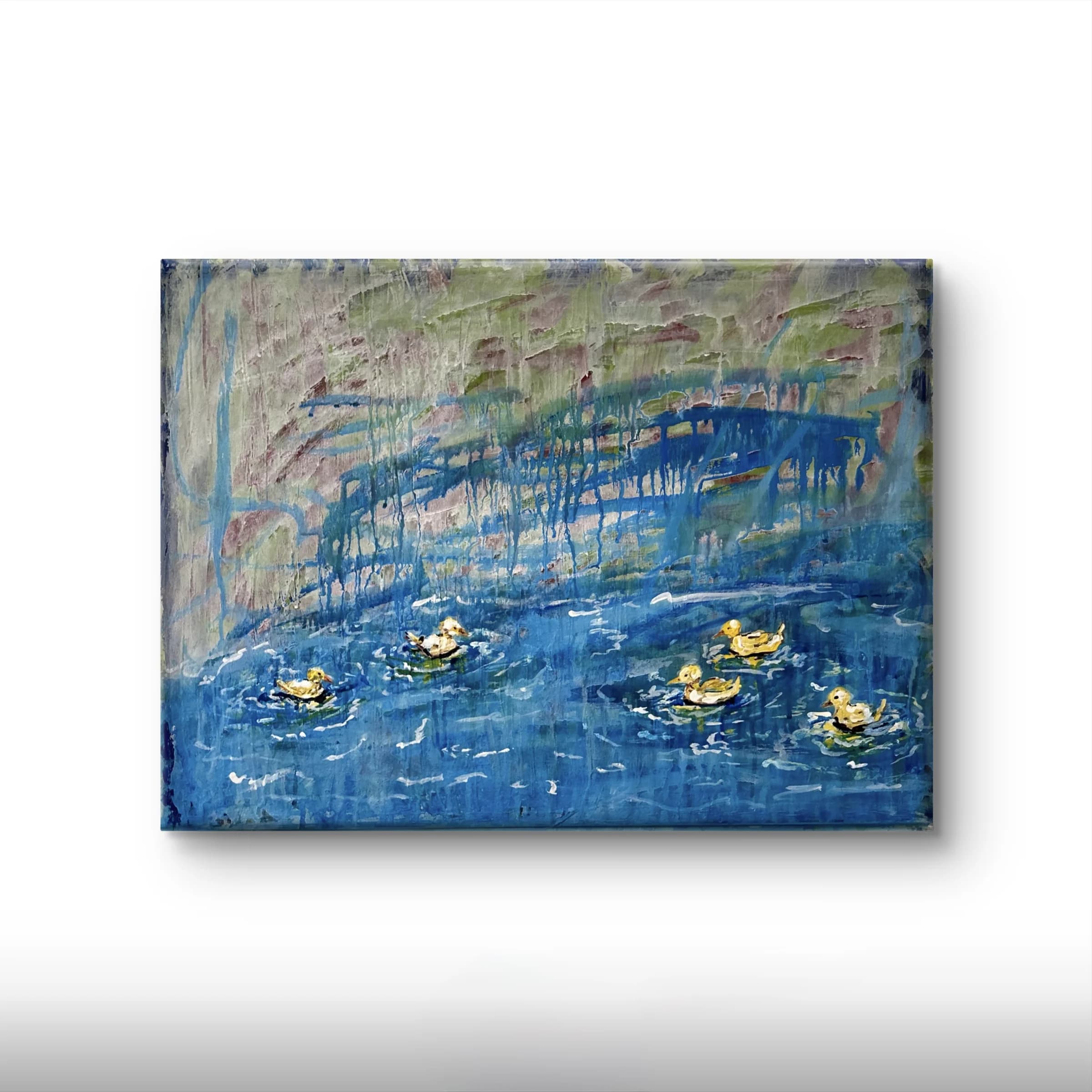
Ducks 20" × 27"
2026
acrylic on cardstock
Sold.
Untitled 49" × 87"
2026
acrylic on wooden panel
Untitled 24" × 30"
2026
acrylic, oil pastel on canvas
Sold.
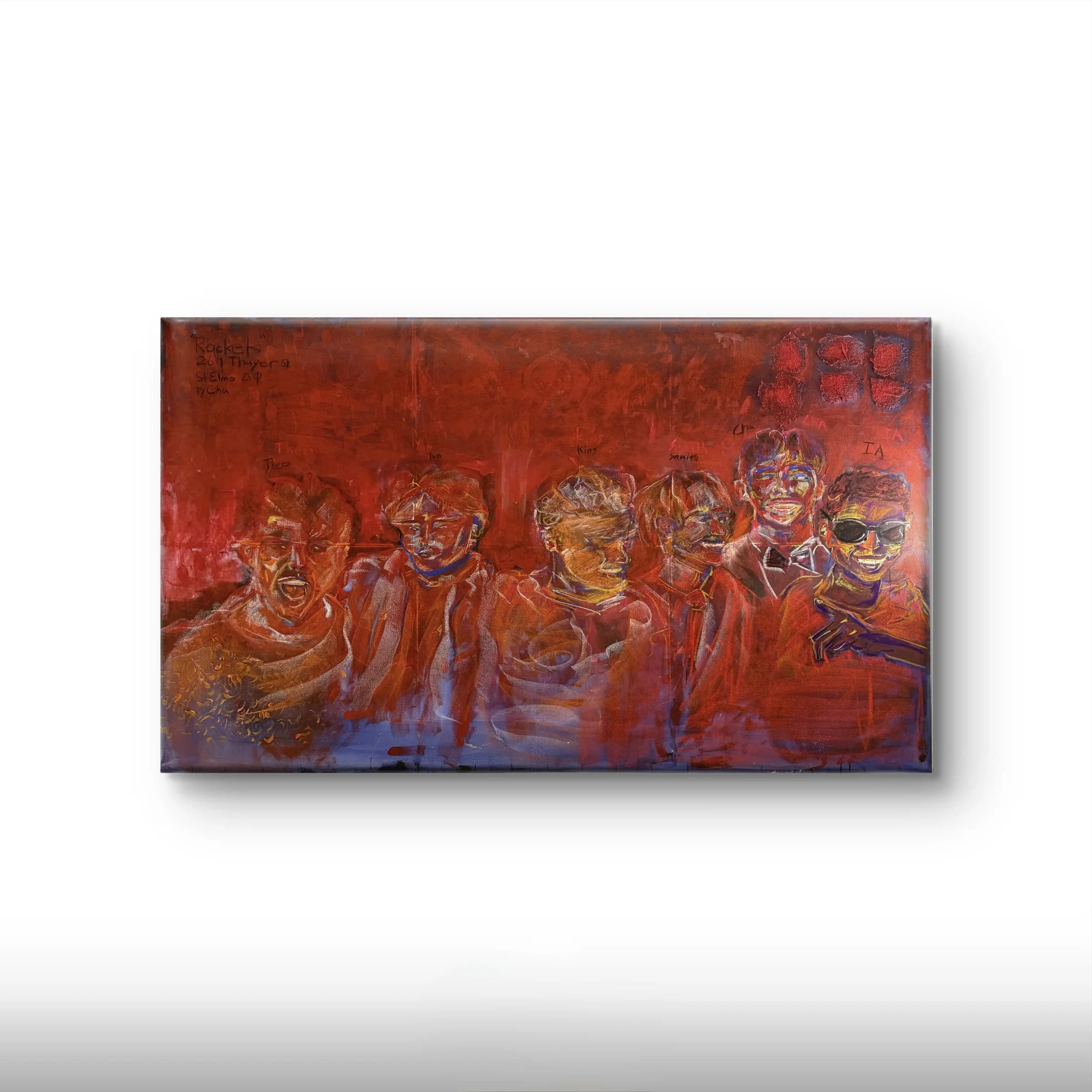
Rockets 56" × 84"
2026
acrylic, oil pastel, pumice paste, charcoal on canvas
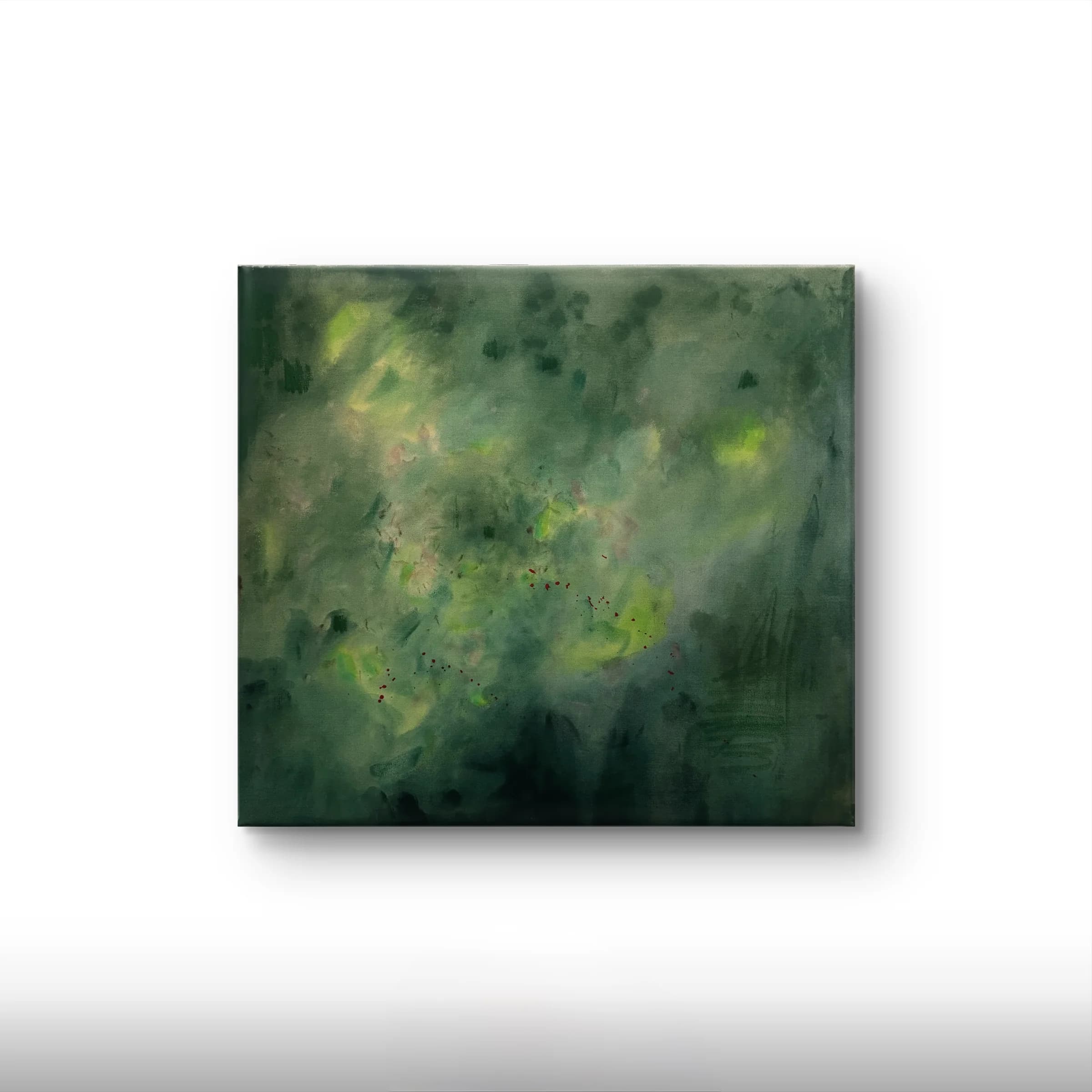
Snaith Green 32" × 36"
2026
acrylic, oil pastel on canvas
Sold.
Untitled 26.5" × 26.5"
2026
acrylic on raw canvas
Sold.
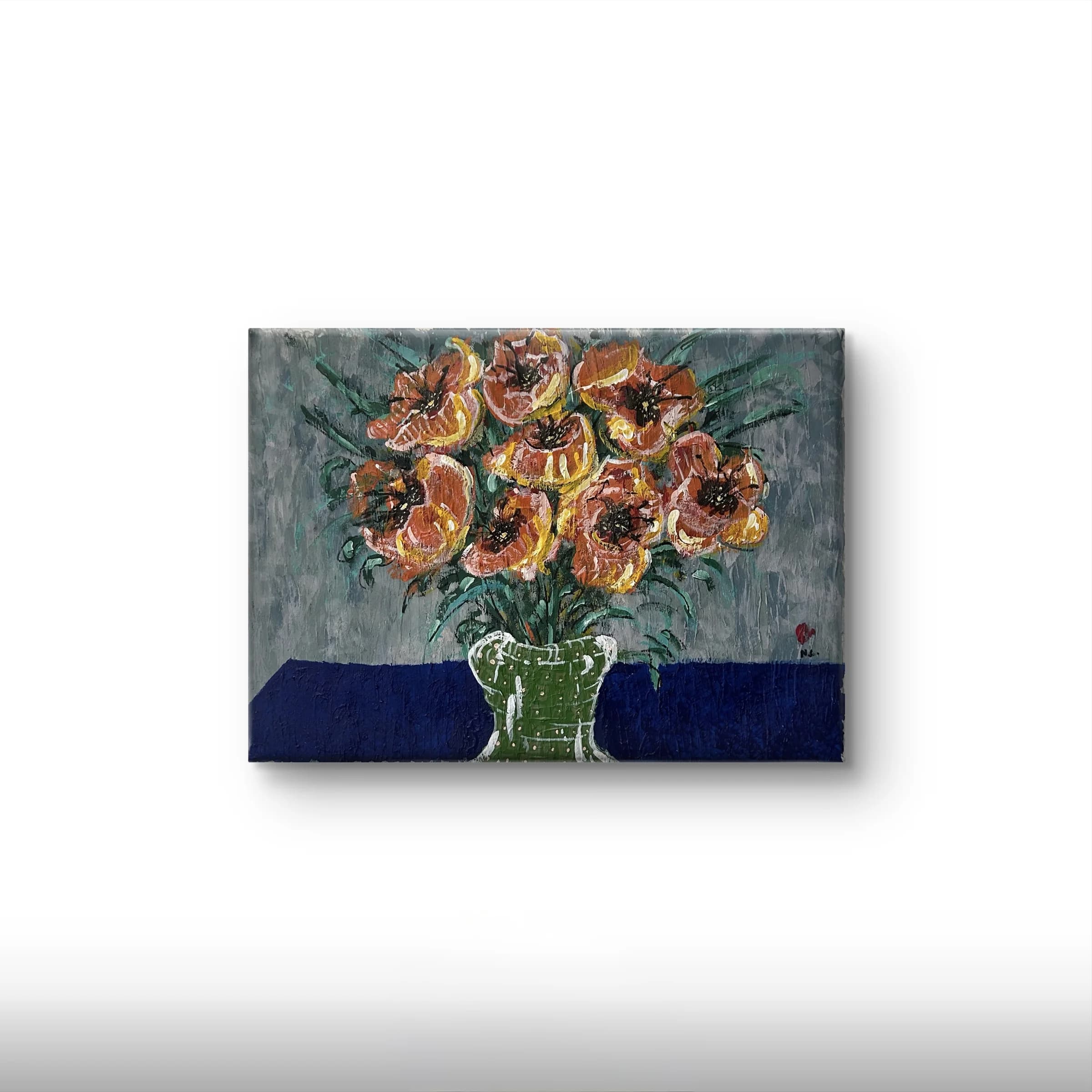
Peonies 20" × 27"
2026
acrylic on poster paper
Sold.
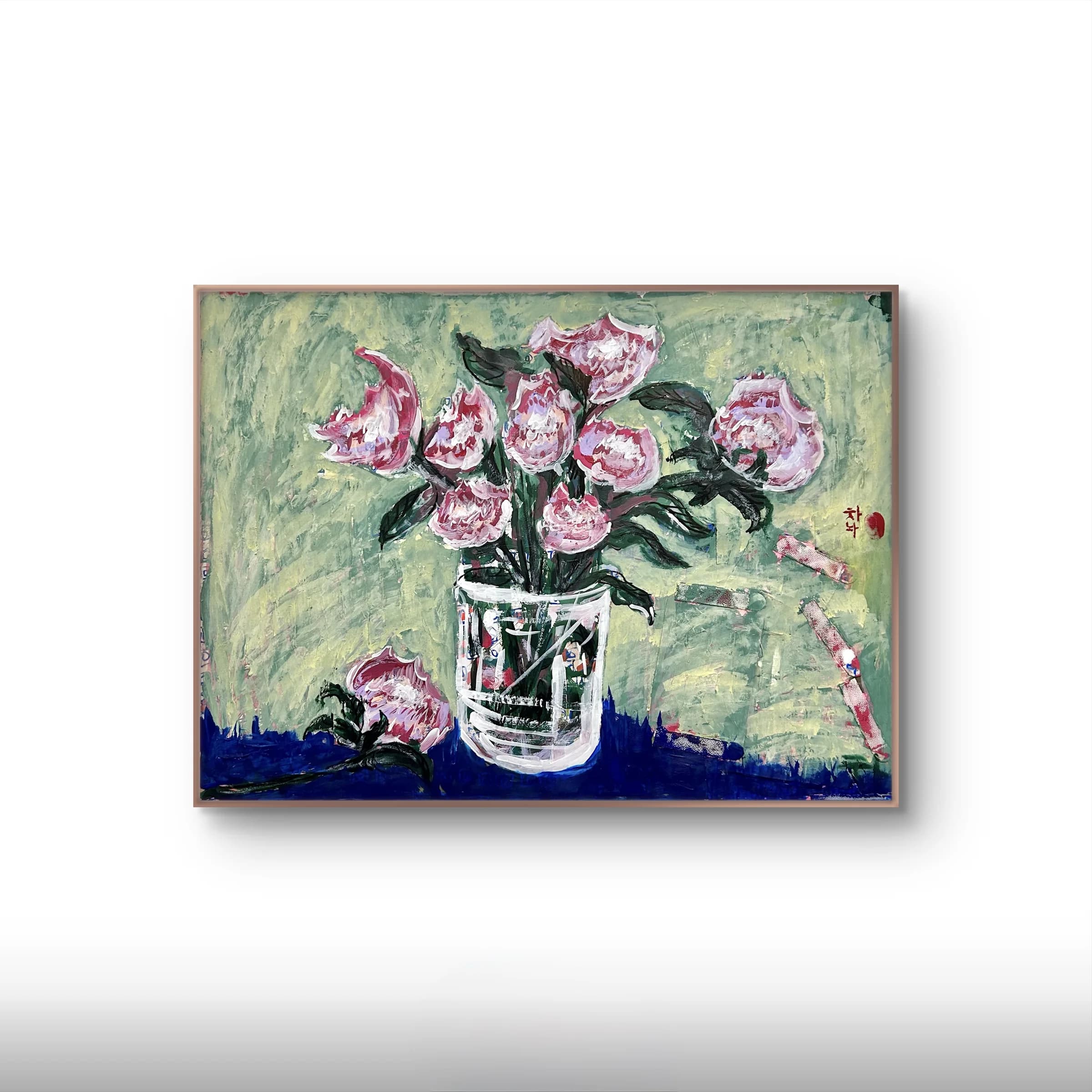
Roses 20" × 27"
2026
acrylic on poster paper
Sold.
Untitled 36" × 56"
2026
acrylic on canvas
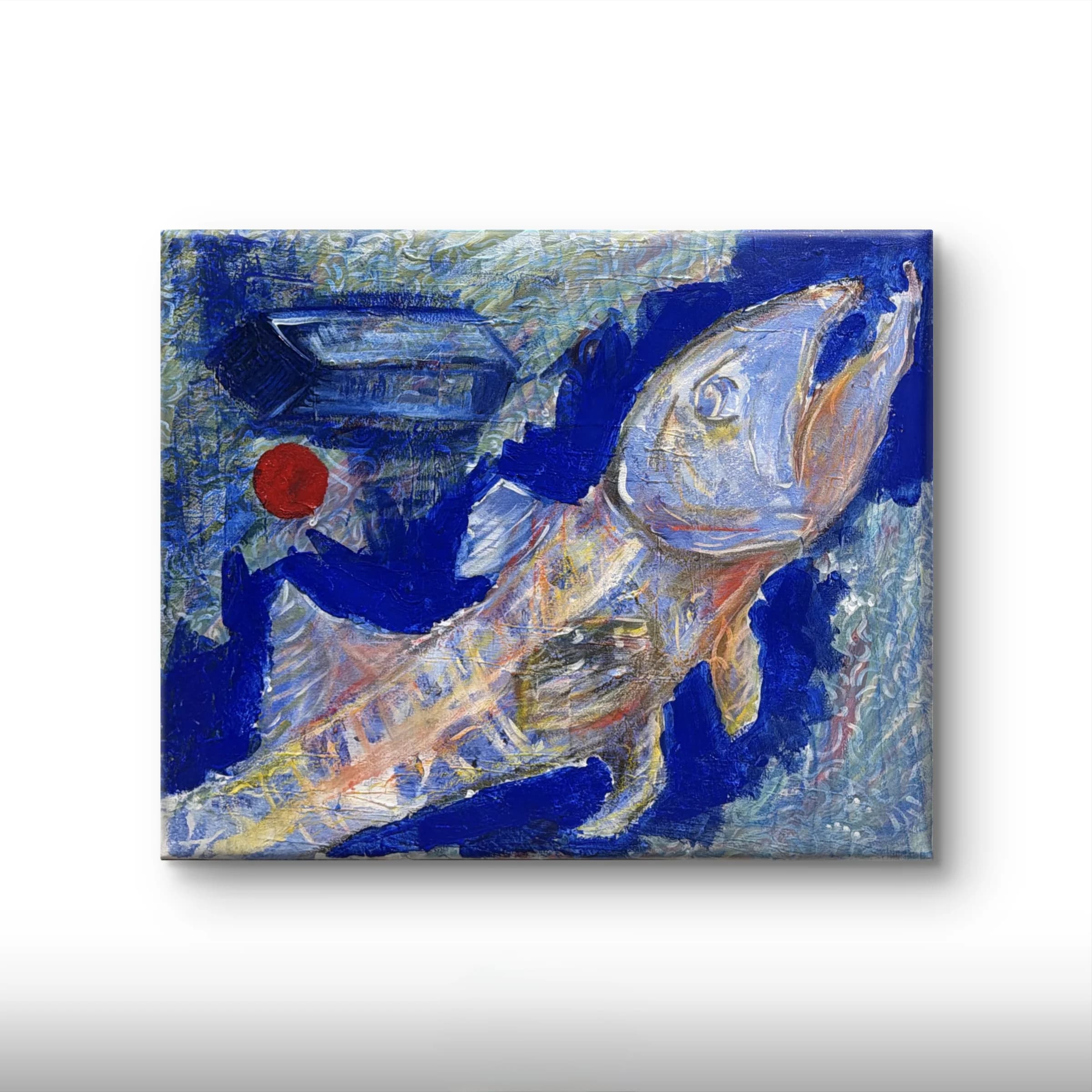
Barracuda 28.5" × 36"
2026
acrylic, oil pastel on canvas
Sold.
SELECTED WORKS
Noah Cha is a designer and frontend engineer. Currently studying CS at Brown University. He is the Head of Design of the Brown Film Magazine and was previously the founding designer and CTO of Vasari AI.